























Here is where it gets funny.
Not funny. But — you know the specific, airless laugh that happens when something is so structurally absurd that the only available response is a sound that is adjacent to a laugh? That kind.
Because the people who know about this are not the people you would expect to not know.
The parents at the schools know which kids look like they're being moved. The teachers know. The emergency room nurses know with a precision that would reorganize your understanding of what a routine shift looks like. The people running the shelters know. The advocates who have been doing this work for years — underfunded, under-thanked, powered by what appears to be pure stubbornness and possibly a concerning amount of coffee — they know details that are specific down to the street level, down to the business names, down to the schedules.
The maps exist. The reports exist. The executive summaries exist. The appendices — and in some cases the appendices to the appendices — exist. We are not, as a region, lacking in documentation of this problem.
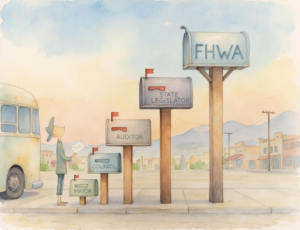
They have told the relevant bodies.
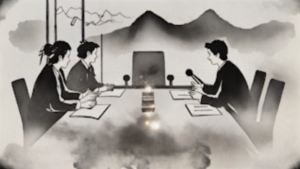
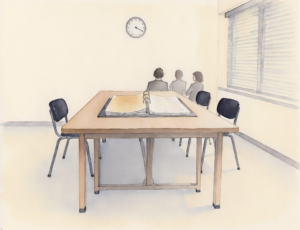
They have made the relevant recommendations. They have submitted the written comments. They have sat in the folding chairs and used their three minutes at the microphone — the three minutes that belong to every resident of El Paso County regardless of whether the relevant body feels like listening that day.
"And the thing that cripples the strongest spirits is not that nobody listened. It's that people listened thoughtfully."
Nodded thoughtfully. Made notes thoughtfully. Expressed concern in the specific register of people who have been trained to express concern in a way that doesn't commit them to anything.
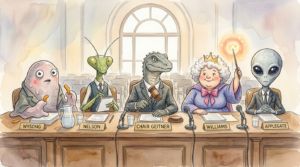
A subcommittee has been formed.
A subcommittee is the institutional equivalent of saying: we hear you and are prepared to hear you again in approximately ninety days in a slightly smaller room.
The subcommittee will produce a report. The report will be received. It will be filed. Filed is the government word for a place documents go to stop being problems.
The subcommittee members are, individually, often very earnest. This is not a comfort.
Then the budget cycle came.
The priorities were what the priorities always are. The subcommittee report was received and filed.
And everyone who fought for it had to decide whether to come back next year and do it again. Whether to drive to the building, sit in the chairs, use the three minutes, produce the documentation, wait through the nodding, and see if this time the budget cycle lands differently.
Most of them do come back.
This is what actual civic courage looks like and it is nothing like what they told you in school.
When the people who know the most go quiet.
Here is where the learned helplessness becomes something darker than personal inconvenience.
When an individual stops pulling levers because the levers haven't worked, the cost is one person's energy and agency. Significant. Real. But bounded.
When a community stops pulling levers — when the people who have been fighting the longest, who know the most, who have the least patience for the subcommittee — when they go quiet, when they redirect their energy somewhere the feedback loop is shorter, when they leave the folding chairs empty because they have been in those chairs before and the chairs don't move anything — the cost is not bounded.
The cost is paid by the people who needed the lever to work and didn't have anyone left to pull it.
Delivered with respect and without apology.
You agreed to die for your country — so what is your country? Is it this city, these people, this street you're living on right now? Or just a paper you signed when you were nineteen and didn't fully understand? The gap between what you were promised and what you actually received is real, and people who exploit others have always known how to find it. You didn't create the gap — but what happens inside it is still yours to decide. Make your country the people in front of you.
This is not a character judgment. This is a supply-and-demand statement. Supply and demand does not care about your character. It barely reads your file.
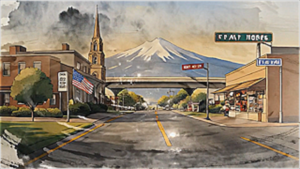
Colorado Springs has housed a large transient population of this description for decades. The infrastructure that exploits children requires a customer base. Those two facts are in the same city. The line between them is shorter than the brochure suggests, and drawing it directly is apparently impolite enough that most of the relevant meetings have managed not to do it.
The meetings are open to the public.
The public is invited to draw the line.
Part Three is the part with momentum.
Part Three is not about what's wrong. Part Three is about which specific rooms, which specific meetings, and what showing up actually looks like — with addresses, times, and the names of the organizations doing the work that the subcommittee keeps almost funding.
It is, against all odds, the part with the most momentum.
Part III — The Levers That Work. Which rooms, which meetings, and what showing up actually looks like.
Further reading & worksheets.
The series has companion pieces that go deeper on the economics and provide practical worksheets. Optional — but useful if you want to follow the arithmetic or bring this material to a classroom, group, or volunteer orientation.
Part A Everything Costs Something, Including You
The premise the rest of the series rests on: every transaction has a price, and when the commodity is a person, the price is still there — it's just distributed across people who didn't agree to pay it.
Read Part A →Part B What Are They Buying
Who the buyers are, what they're actually purchasing, and why that market exists in a city that looks fine from the outside. The uncomfortable half of the supply-and-demand picture.
Read Part B →Part C What It Costs to Raise You
The overhead of being raised — food, housing, school, medicine, time — and the comparison to what happens when the same child is raised into something else. The numbers are not abstract.
Read Part C →Summary The Full Picture
Parts A, B, and C assembled side-by-side. For readers who want the argument in one piece rather than spread across three.
Read the Summary →Worksheets Jordan's Worksheets
Fillable pages for people who want to track their own show-up, their own follow-through, or who are teaching this material in a classroom, small group, or volunteer orientation.
Open the Worksheets →