
Story Seed Studios
  • Type:
  • Genre:
  • Duration:
  • Average Rating:
  • Series
  • Books
  • Latest News
  • Type:
  • Genre:
  • Duration:
  • Average Rating:
  • Series
  • Books
  • Latest News
The Import Economy — IV: The Exit Ramp

The Import Economy — IV: The Exit Ramp

The Import Economy — IV: The Exit Ramp

The Import Economy — IV: The Exit Ramp

⬡ The Dais The Import Economy — A Four-Part Essay
Part I Part II Part III Part IV
In This Series
  • Part IThe Brochure
  • Part IIThe Committee
  • Part IIIThe Levers That Work
  • Part IVThe Exit Ramp
On This Page
  • You Are Not Too Far Gone
  • The Record Already Exists
  • Your Options
  • A Different Wave
  • What Your Mama Should Have Said
Confidential Help
Stop It Now Helpline
1-888-773-8368
For people concerned about their own thoughts or behaviors. Confidential. Free.
SAMHSA — Mental Health
1-800-662-4357
Treatment referral. Confidential. 24 hours.
What the Record Contains
Digital Footprint
Transaction records
Device location history
Platform messaging logs
Video / photo metadata
Financial transfers
Search history
Cell tower data
Property records
Options at a Glance
Just stop
For some people, this is the whole answer. Decide. Stop. No program required.
Therapy
Individual, confidential, addresses root causes. ATSA can locate a specialist.
Support groups
SAA, SCA, and others offer anonymous community for accountability.
Medical evaluation
Some compulsive behaviors have neurological or hormonal contributors.
Diversion programs
If you've been cited, some jurisdictions offer education before prosecution.
Legal counsel
If you're already in it legally, get an attorney before you say anything.
Call Stop It Now: 1-888-773-8368 ← Back to Part III
The Dais / StorySeed · Part Four of Four
The Import Economy

The Exit Ramp

This part is addressed directly to people who have participated in, paid for, or are thinking about participating in the buying or exploitation of other human beings. You are not too far gone. But you need to read this.

Colorado Springs, CO March 2026 10 min read

This section is not written for the people who are horrified by what was described in Parts One through Three.

They're already with us.

This is written for the people who read those three parts and felt something uncomfortable and specific — not outrage, not sympathy. Something quieter. Something that sits in the chest differently than regular discomfort does.

You know who you are. This is for you.

You are not too far gone.

Whatever you have done — paid for someone, used someone, looked the other way when you knew what you were looking at, told yourself it was transactional and therefore neutral, told yourself they wanted it, told yourself everyone does this — you are not past the point where it stops being yours to change.

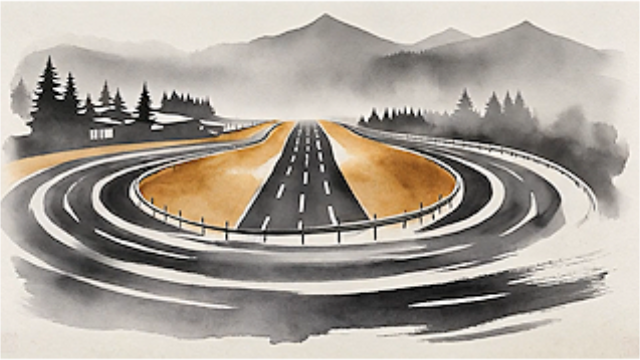
That point exists. You don't want to find out where it is by arriving at it. The exit ramp is here. It gets harder to take the further down the road you go.

This is not a threat. This is just geography.

There's also something else you need to understand, and it is not delivered with anger. It is delivered the way you tell someone their tire is flat before they get on the highway.

The record already exists
What you need to know about the digital age

Every transaction leaves a record. Every device leaves a record. The record already exists. You did not do the thing and then have it disappear. You did the thing and it was written down by the infrastructure of modern life, which does not have a conscience but does have an excellent memory.

Specifically, in the current technological environment, engaging in this economy means:

  • Your device location was logged. Not maybe. It was. Cell towers, GPS, app data — all of it timestamped and stored.
  • Financial transactions — cash apps, cards, transfers — create trails that financial investigators are trained to follow. Cash is harder to trace. It is not impossible.
  • Platforms used to facilitate contact retain message logs. When those platforms cooperate with law enforcement — and increasingly they do — those logs become evidence.
  • If video or photo exists, it exists permanently. Metadata embeds location, device, and timestamp. Distribution creates additional legal exposure.
  • Property records, rental agreements, and business licenses connect to people. Investigators are patient and they have time you don't.
  • The people you did this with — or to — remember. Memory is its own kind of record.

The question is not whether evidence exists. The question is whether it will be assembled, and when, and what your life looks like on the day that happens.

Is it worth it? That is the only question. And it is genuinely yours to answer.

Some people reading this have done something once, or a few times, and have been carrying it since. Some have built a habit. Some are not sure what to call it. Some are in it right now and the reason they're reading a civic essay is that some part of their brain is looking for any door that doesn't lead deeper into what they're already doing.

Those are different situations. They have different answers. But they have answers.

Your options — honestly listed

These are real options. Not all of them apply to every situation. None of them require you to be ready — just willing enough to take one step.

Option 1 — Just Stop
For: People who did something, know it was wrong, haven't made it a pattern
For some people, this is the complete answer. Decide. Stop. Don't do it again. You don't need a program or a hotline or a support group. You need to make a decision and live inside it. This sounds simple and for some people it actually is simple — not easy, but simple. Make the decision. Hold it.
  • No resource needed. Just the decision — and possibly one person you trust enough to say it out loud to, which makes it more real.
Option 2 — Individual Therapy
For: People who've tried to stop and haven't been able to; people who want to understand the why
A therapist who specializes in sexual compulsivity or problematic sexual behavior can help you understand what's actually driving this — because the behavior is rarely the whole story. It's usually covering something else. Therapy is confidential. Therapists are not mandatory reporters for adult behavior (with specific legal exceptions your therapist will explain). You do not have to confess a crime to get help changing a pattern.
  • ATSA — Association for the Treatment of Sexual Abusers Find a qualified therapist. Professional directory. atsa.com
  • Psychology Today Therapist Finder Search by specialty, location, insurance. psychologytoday.com
  • SAMHSA National Helpline 1-800-662-4357 · Free, confidential treatment referral
Option 3 — Support Groups and Peer Accountability
For: People who need community, accountability, and to know they are not the only person who has ever had to fight this
Anonymous peer support programs exist for people dealing with sexual compulsivity and related behaviors. They are not religious requirements. They are not public shaming. They are rooms full of people who are also trying, meeting regularly because the trying is easier when it's not entirely private.
  • Sex Addicts Anonymous (SAA) 12-step program. In-person and online meetings. saa-recovery.org
  • Sexual Compulsives Anonymous (SCA) Peer support for sexual compulsivity. sca-recovery.org
  • Sexaholics Anonymous (SA) Structured recovery program. sa.org
Option 4 — Medical Evaluation
For: People who genuinely cannot understand why they can't stop; people wondering if something neurological is a factor
Some compulsive behaviors have neurological, hormonal, or psychiatric contributors that can be assessed and addressed medically. This is not an excuse — it's information. Certain medications can reduce compulsive urges significantly. A psychiatrist or physician can evaluate whether this is a factor in your situation. This is not a fix by itself. But for some people it's the piece that makes everything else actually workable.
  • SAMHSA Treatment Referral 1-800-662-4357 · Can refer to psychiatrists and medical providers
  • Ask your primary care physician for a referral to psychiatry. You don't have to explain everything. "I'm having trouble with compulsive behavior and want to see if there's a medical component" is enough.
Option 5 — The Stop It Now Helpline
For: Anyone who is worried about their own thoughts or behaviors toward children or others; anyone who wants to talk to someone before they do something they can't undo
Stop It Now exists specifically for this. It is confidential. It is free. It is staffed by people who have heard everything and are not there to report you — they are there to help you stop before you cause harm, or more harm. This is the call that interrupts the pattern before the pattern becomes irreversible. Pick up the phone.
  • Stop It Now 1-888-773-8368 · Confidential helpline · stopitnow.org
  • Online chat also available if calling feels like too much. Same confidentiality.
Option 6 — Legal Counsel
For: People who are already in a legal situation, or believe they are about to be
If you have already been cited, arrested, or believe you are under investigation: get an attorney before you say anything to anyone. This is not about escaping accountability. This is about having someone who understands the system in your corner while you navigate it. Cooperation is often possible and sometimes helpful — but it should happen with legal counsel, not instead of it. A public defender is available if you cannot afford an attorney. Use them.
  • Legal Services Corporation — Find Legal Aid lsc.gov · Free and low-cost legal help by location
  • Colorado State Public Defender: (303) 764-1400
  • El Paso County: Ask for appointed counsel at your first appearance. It's your right.
A different wave

Here is something that doesn't get said enough in this conversation.

The demand side of this economy is not made up of monsters. It is made up of people — people who are isolated, or broken in some specific way that nobody helped them fix, or addicted to something they started before they understood what it would cost them, or simply never learned that other people's pain is real in the same way their own is.

That doesn't make it acceptable. It makes it human, which is actually more complicated than making it evil, because evil you can just oppose. Human you have to actually work with.

"Just because there is a demand doesn't mean it makes it right. But it means there is momentum. And momentum can be redirected. You can surf a different wave — one that isn't built on hurting someone to stay upright."

The wave that is built on other people — on buying their time, their bodies, their compliance, their silence — that wave eventually breaks. It always does. The question is whether you're still on it when it does.

There is a different wave. It requires the same energy, the same showing up, the same early morning and the same drive and the same willingness to be somewhere specific on a schedule. It just doesn't destroy anyone on its way to shore.

That wave exists. It's available. The entry fee is a decision.

What Your Mama Should Have Said — And If She Didn't, Here It Is

You are better than this.

I know that might be the first time anyone has said that to you without something attached to it — without the condition, without the performance required, without the fine print. So let me say it plain.

You are better than what you have been doing. Not because you're special. Because you're a person, and persons are capable of deciding who they are going to be, and that capacity doesn't expire. It is available to you right now, today, in whatever condition you are in.

If your mama never taught you that — or if she did and you stopped believing it somewhere along the way — well. Today is the day.

I'm not your mama. I've just been here long enough to know you need to hear this if you're listening. And the fact that you read all the way to the end of a four-part civic essay about human trafficking in El Paso County tells me something about you that you might not be saying out loud yet.

You're listening.

Good. That's the first thing.

Now make the call. Or make the decision. Or make the appointment. Or just put the phone down and don't pick up the one that leads where you know it leads.

One thing. One step. Today.

The rest follows from that.

Confidential Resources — All Free
Stop It Now Helpline
1-888-773-8368
For people concerned about their own behavior. Confidential.
SAMHSA National Helpline
1-800-662-4357
Mental health and substance treatment referral. 24 hours.
Sex Addicts Anonymous
saa-recovery.org
In-person and online meetings. Anonymous.
National Trafficking Hotline
1-888-373-7888
If someone you know needs help. Text HELP to 233733.
← Part III The Levers That Work
⬡ THE DAIS / STORYSEED PROJECT · storyseedstudios.com
Stop It Now: 1-888-773-8368 · SAMHSA: 1-800-662-4357 · Trafficking Hotline: 1-888-373-7888
Not affiliated with El Paso County government. Not legal advice. Public record content is public domain. Editorial © The Dais / StorySeed.

More Like This

The Sound Effect "THWACK. KRAKOW. APPROVED." Local government is louder than you think. You just can't hear it from the couch. Full comic book action page — but every dramatic sound effect is bureaucratic. A gavel coming down: "APPROVED." Someone circling a budget line: "KRAKOW." A water pipe getting approved for repair: "THWUMP." A planning vote: "VOOOOM." The art is pure comic energy — speed lines, impact starbursts, dramatic angles — but every action is completely mundane. A person at a microphone during public comment, rendered mid-punch in a fight scene: "REMARK." Final panel wide shot: the meeting room in the aftermath. Chairs slightly askew. Agendas on the table. Caption: "It was a routine session." Mood Same energy as a Marvel splash page. None of the same ingredients.

Your County Runs on Volunteers

PART ONE IMAGE — The Brochure "Everything That Looks Fine From the Outside" Tagline: The brochure is accurate as far as it goes. A diptych — two images side by side, same physical location, completely different information. LEFT: A Colorado Springs street in full golden hour. Manicured lawn. American flag hung with precision. A megachurch steeple in the soft background. A FOR RENT sign on a tidy storefront. Everything photographed the way a city would photograph itself for a tourism campaign — warm, orderly, functional. Pikes Peak perfectly placed in the upper right corner like it was hired for the shot. RIGHT: The exact same street. Same buildings. Same mountain. But the camera has stepped back six inches and tilted down slightly — and now you can see the I-25 overpass at the edge of the frame, the transient motel sign that was just out of crop in the first image, the cash-only parking lot, the strip of commercial businesses that don't quite have names you'd recognize. The mountain is still there. The street is still real. The frame just got honest. No people in either image. No faces. Just architecture and geography telling two different true stories about the same place. Mood: This is not an accusation of the city. It's a description of what framing does. The same place can be both things. The question is which one you're looking at.

The Import Economy — I. The Brochure

Decorative Image

001. Roads, a Retirement & a Restaurant That Can’t Get Approved

  • –Share on Twitter
  • –Share on Facebook
  • –Share on Reddit
  • –Share via Email