We spent a year following a single number that didn't add up. Here is where it went — and what it grew into. The Import Economy. The Lesson Zero curriculum. All of it free. All of it pointing at the same room.
The Import Economy is a four-part essay series on human trafficking along the I-25 corridor, the local government structures that fund the response to it, and the gap — the measurable, documented distance between what organizations asked for and what they received. It started as one agenda item. It became a course.
Each part can stand alone. Together they trace the full arc — from how trafficking enters a community, to how local government responds, to what actually works, to how someone leaves.
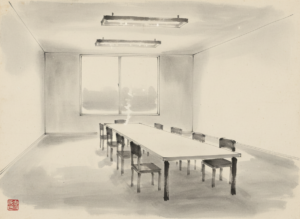
"Voting is a good thing. And there is a meeting that happens before the vote — before the policy, before the headline — where the funding gets allocated and the gaps get set. That table is open every week. It just rarely has anyone sitting at it."
How trafficking is marketed, how it enters a community, and why Colorado Springs is a specific kind of target — not despite the military presence, but partly because of it. The brochure is accurate as far as it goes.
Watch Part I →
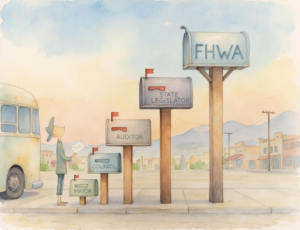
The local government funding structure for anti-trafficking services — who decides, how they decide, and what happens in the rooms where most of the chairs are empty. A subcommittee has been formed.
Watch Part II →
What the research actually shows — the interventions with documented outcomes, the organizations in Colorado Springs doing the work that holds up under scrutiny. This part has the addresses.
Watch Part III →
What leaving actually looks like — financially, practically, socially — and why the services that make exit possible are consistently the ones with the biggest funding gaps. This part is addressed directly to people who need a way out.
Watch Part IV →The people most likely to be affected by the decisions in that committee room — teenagers, young adults, people without the financial context to recognize what was happening to them — had no reason to care about a government meeting they had never heard of.
So we asked a different question: what if financial literacy were the entry point? Not because money is more important than safety, but because the math of personal spending and the math of a city budget are structurally identical. Money in. Money out. The gap. Once you can read one, you can read the other.
That question became Lesson Zero.
Lesson Zero is a four-part financial literacy curriculum for teenagers. It does not assume civic interest. It starts where everyone already is — their own monthly spending — and builds outward. By the end, a student has mapped their personal budget, understood what someone else spending money on them might actually mean, priced out a full year of their own life, and connected those three numbers to the gap in a real city budget. All four workbooks are free, interactive, and printable.
A filled-in sample budget for a realistic 16-year-old in Colorado Springs. A role-play worksheet on college paths, savings vs. loans, and the service decision — time vs. money, and why only one of them goes on a resume. A letter of gratitude template that uses real numbers from Part C. Three versions of a letter to city council, from four-sentence first-timer to someone who keeps coming back.
All of it is free. All of it points at the same thing: a budget meeting, a funding gap, and a room that has more empty chairs than it should. The series is complete. The curriculum is live. The room is open every third Wednesday at 12:30 PM.
The Dais · StorySeed Studios · storyseedstudios.com · Colorado Springs, CO · March 2026
Not affiliated with El Paso County government. Not legal advice. Public record content is public domain. Editorial © The Dais / StorySeed Studios.
National Trafficking Hotline: 1-888-373-7888 · Text HELP to 233733 ·
Stop It Now: 1-888-773-8368 ·
SAMHSA: 1-800-662-4357