




















The Hike Was Fine
Three miles. Good view. Nobody mentioned the ten mile plan. They turned around at what Ambrocius Bodacious Bocephus called a landmark and Brannon Meskahashish did not argue with, because the view was in fact good and his water bottle situation had been exactly what ABB's trail map suggested it would be.
They didn't talk much about the emails on the way up. Or on the way down. Or after. Some things you send into the world and then you walk away from them for a little while, because the alternative is refreshing your inbox on a trail and nobody needs that.
Everything they'd sent on a Friday night was out there somewhere. Three CORA requests running on three separate clocks. An email to engineering. A letter to the City Auditor. An extension letter copied to fourteen people. A form on GitHub. A link to the city webmaster with no context attached.
The prototype was at cheetochopsticks.com with the honest note about what it had and what it was waiting for. The legal pad was on the kitchen table where ABB left it. The trail map was still in the corner.
The Waiting
Sunday came. No response from engineering. No acknowledgment from the mayor's office. No response from the City Auditor yet — one business day, which was expected. The absence of response has its own texture. It sits in the room the way a question sits in a room when nobody is ready to answer it yet.
Monday came. Brannon checked the inbox. Nothing from engineering. Nothing from the mayor's office. Nothing from the Chief of Staff. Nothing from the City Auditor. Nothing from Procurement Services. Nothing from any of the nine council members. Nothing from USAA.
No Notification System
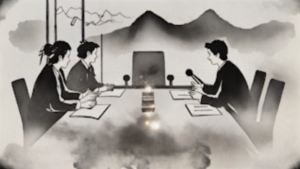
At some point they watched some of the meetings back. Not to feel bad about what they'd done. To understand the room better. To see how other people used their three minutes.
What they saw: people came prepared. They read the staff report, found the criterion, anchored their comment to the standard. They put it on the record. And the item moved to the next stage. And sometimes the next stage was a different hearing — a different room, a different body — and the comment period for that stage had already closed. Quietly. Without notification. Without an email. Without a telephone pole notice with a QR code.
The window that mattered was a different window. In a different room. On a different Tuesday. That had already happened.
ABB watched one of these sequences three times. "There's no notification system," he said. "No." "There should be." "Yes." "Someone should build one."
Brannon looked at him. "We're already building something."
More Than Nothing Compounds
"We found the plan by accident. Because the universe placed it in front of me on an unremarkable evening. And the PDF didn't load. And the comment window closed. And there was no notification. And you couldn't call in. And you called me. And we built something."
"We built something with what we had. Which wasn't everything. Three CORA requests. None of them back yet. The internal analysis might change what we found. Or confirm it. We don't know yet."
"But the prototype is accurate with what we have. And we said so on the page. And we filed the requests the right way. Even when the portal made it hard. Especially when the portal made it hard. And we built the form that would have made it easy. And noted for the record," ABB said, "that a resident who wants to request records about GovOutreach must use GovOutreach to do so. That sentence is in a filed public records request. Natalie Lovell has a copy. Nine council members have a copy. The mayor's chief of staff has a copy."
"Is it enough," Brannon said.
"One brick." "Laid correctly."
Planes?
The first public records request came back Thursday. The ArcGIS procurement one. Partial response — some documents, not all, a note about additional review, and a fee. The other two were still running.
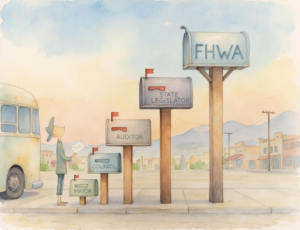
Brannon texted ABB. ABB replied immediately: request the written denial citing the specific statutory exemption under Colorado Revised Statutes, section 24-72-204. Follow up on the missing documents in writing. If nothing in five days — escalate in order: state legislator, City Auditor, Colorado Freedom of Information Coalition, then if needed the FHWA federal complaint. The Safety Action Plan is federally funded. That mechanism has real reach.
And then.
ABB looked at the legal pad. At the trail map. Typed back: And then we keep going.
Then ABB found another hearing on the YouTube channel. Sent Brannon a link. No context. The way he always does. Brannon clicked it. Read the title. Looked at the date. Texted back one word.
ABB replied: Zoning variance.
Three seconds.
ABB smiled. Sent one more: I know. But first we need the data.
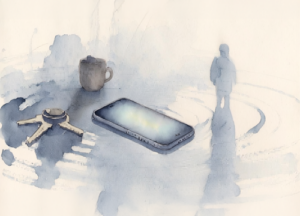
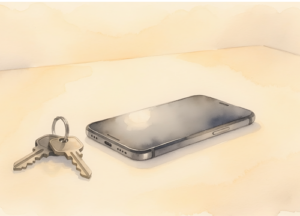
The phone. Face up. USAA not calling. There's always another hearing. There's always a little time. One brick. Laid correctly. Why not.
Seven Items. One Kitchen Table.
All of them in motion simultaneously. None of them guaranteed. All of them real.
Partial Response. Fee. Two Still Running.
The ArcGIS CORA came back Thursday. Some documents. Not all. A fee. This is normal. The CORA process has a specific escalation path for exactly this situation.
1. Request the written denial. If documents were withheld, they must cite the specific statutory exemption in writing — your right under Colorado Revised Statutes, section 24-72-204.
2. Follow up on missing documents in writing. Give a five-day deadline. Keep copies of everything.
3. State legislator. Four minutes to find yours at leg.colorado.gov/find-my-legislator. A call from a legislator's office moves faster than any records request.
4. City Auditor — if the procurement decision is the issue and she hasn't already acted.
5. Colorado Freedom of Information Coalition — coloradofoic.org — free guidance on CORA disputes, no lawyer needed.
6. Federal complaint (FHWA or DOJ). The Safety Action Plan is federally funded. FHWA oversees ADA compliance on federally assisted transportation projects; the DOJ oversees Title II web accessibility for state and local governments. File with FHWA at highways.dot.gov/civil-rights/ada-complaint or FHWA.ADAcomplaints@dot.gov. File with DOJ at ada.gov/file-a-complaint. Twenty minutes each. No lawyer required.
Why? And How Can We Help?
GovOutreach is a vendor the city pays to manage constituent communication. One sentence in a filed public records request: a resident who wants to request records about GovOutreach must use GovOutreach to do so.
That sentence is now in a public document. Natalie Lovell has a copy. Nine council members have a copy. The mayor's chief of staff has a copy.
The question isn't an accusation — it's a genuine one. Sometimes these arrangements happen reactively, solving one problem without seeing the bigger picture. If you've built something that could do the same job better and for less, the right conversation is: why is this set up this way, and how can we help? That's a different conversation than a complaint. And it tends to get answered.
The City Auditor reviews procurement decisions and city spending. The City's Chief Financial Officer looks at where the money goes and whether it's working. Both are worth talking to — not to point fingers, but to offer a better path.
They're Asking for Company
Not for applause. There is no applause in this. They didn't build the prototype for applause. They built it because the PDF didn't load and the comment window closed and there was a little time and why not. They're telling you exactly who to call.
The notification system doesn't exist yet. The comment windows open and close without warning. The people with the authority to fix it need to hear from more than two people at a kitchen table. Use whichever rung you can reach.
-
Rung 1 · Mayor's OfficeMayor Yemi Mobolade — and the Chief of StaffOne paragraph. The Safety Action Plan by name. The federal WCAG 2.1 AA compliance framework. The free accessible tool that's been offered. A request for a meeting or a referral. The Chief of Staff (Wayne Williams, interim — effective April 20, 2026) is the person who routes constituent concerns to department directors.
-
Rung 2 · City CouncilAll nine members — one emailThey vote on the Safety Action Plan adoption. Constituent correspondence before a vote is on the record. Lynette Crow-Iverson (President, At Large), Brian Risley (President Pro Tem, At Large), David Leinweber (At Large), Dave Donelson (D1), Ken Casey (D2, appointed April 2026), Brandy Williams (D3), Kimberly Gold (D4), Nancy Henjum (D5), Roland Rainey (D6).All nine: allcouncil@coloradosprings.govWritten comment (clerk): cityclerk@coloradosprings.gov
-
Rung 3 · City AuditorNatalie LovellReviews procurement decisions and city spending. If you have a question about how a vendor was selected, or a better solution you want to offer, this is the right room. A written letter with documentation works best.
-
Rung 4 · State LegislatorYour Colorado House representative and State senatorFour minutes to find yours. Type your address. Call constituent services. State your name and address. One paragraph. A legislator's office calling a city department moves faster than any CORA request.
-
Rung 5 · Federal — FHWA or DOJADA complaint — Federal Highway Administration or DOJ Civil RightsThe Safety Action Plan is funded by the Safe Streets for All federal grant program. ADA accessibility requirements attach to federally funded transportation projects — which means the FHWA has jurisdiction over pedestrian rights-of-way and program accessibility. The DOJ Civil Rights Division handles Title II complaints about state and local government websites. Either is valid. Twenty minutes online. No lawyer required.FHWA complaint portal: highways.dot.gov/civil-rights/ada-complaintDOJ ADA portal: ada.gov/file-a-complaint
The Safety Action Plan comment period closed before most residents knew it existed — but students can write in asking for an extension, with real reasons: the PDF wasn't loading, and accessibility standards weren't met. That's a civics lesson that moves.
The ArcGIS dashboard doesn't meet four federal accessibility standards. That's a technology lesson. The CORA portal requires information the law doesn't require. That's a systems lesson. The accountability ladder has five rungs, each with a different kind of weight. That's a government structure lesson. The fixes take 45 minutes. That's a problem-solving lesson. Brannon and ABB did all of this at a kitchen table on a Friday night while waiting for an insurance company to call back. Citizenship looks like "why not" when it's not in a textbook.
We don't have a packaged curriculum yet. We have eight episodes, a prototype, an accessibility audit, an accessible CORA form, and a complete accountability ladder. If you want to use any of it — assign an episode, have students find an active local project, file a public records request as homework, call a state legislator's constituent services line as a class exercise — we want to know what works.
Looking things up. Finding gaps. Asking why. Noticing when the answer doesn't match the question. You're already doing this. You don't need a credential. You don't need to be old enough to vote. You need a browser and a willingness to look and a little time.
The state legislator lookup takes four minutes. The federal complaint takes twenty. The CORA request takes as long as it takes to describe what you're looking for in plain language. You qualify for all of it. And yes — documenting civic work, filing a real public records request, building something with public data and offering it to a city — that is something to put on a resume.
Brannon and ABB built something at a kitchen table on a Friday night and they're offering it to you. Not as a finished product — as a spec. The crash data, the city's own danger ratings for each road, and the accessibility audit findings in one place, plain language, any device, free, no ArcGIS license required.
And separately: an accessible CORA submission form that doesn't require a document number you don't have, built on Drupal's Webform module — free and already in your CMS ecosystem. Take it. Improve it. Make it yours. We know how it goes being a cog in a wheel — hence the free tag.
We are all students here. Brannon Meskahashish is a student. He learned what a staff report was six weeks before he showed up to a hearing with Cheetos and chopsticks and accidentally moved a public record. Ambrocius Bodacious Bocephus is a student. He learned there was a hearing before the hearing by watching YouTube meetings on a Sunday night after a three mile hike that was supposed to be ten.
Not heroes. Not experts. Not people with the right credentials and the right office and the right title. Just people with a little time. One brick. Laid correctly. On a foundation that needs more bricks.
Why not.
Questions You Can Ask Tonight
These put specific, documented events on the public record. Pick one. One is enough.
Tap any question to copy it to your clipboard.
The Five Rungs
The Safety Action Plan adoption vote is targeted for May 2026. Three CORA requests still running. The tools are live and the door is open.
Mayor Yemi Mobolade: yemi.mobolade@coloradosprings.gov · (719) 385-5900
Chief of Staff: Wayne Williams (interim, effective April 20, 2026) — route through the Mayor's Office
All City Council: allcouncil@coloradosprings.gov
City Clerk (written comment): cityclerk@coloradosprings.gov
City Auditor Natalie Lovell: Natalie.Lovell@coloradosprings.gov · (719) 385-5901
CFO Charae McDaniel: Charae.McDaniel@coloradosprings.gov
Traffic Engineering: Traffic-Engineering.SMB@coloradosprings.gov · (719) 385-7433
FHWA ADA complaints: FHWA.ADAcomplaints@dot.gov · (202) 366-0693
DOJ ADA complaints: ada.gov/file-a-complaint
Colorado Freedom of Information Coalition: coloradofoic.org
State legislator lookup: leg.colorado.gov/find-my-legislator
GitHub (open source): github.com/phonon56
Send Us What You Find
A response from the mayor's office. A CORA document that came back. A classroom that tried something. A council meeting where someone asked one of these questions. A city staffer who picked up the phone.
Why not.
"Planes?" — "Zoning variance." — Three seconds. — "I can fix that." — "I know. But first we need the data."
The Map · Episode Eight · Series Finale · Colorado Springs · April 2026
The Dais · The Map · Three Minutes or More · Series Two · Episode Eight · Colorado Springs, Colorado · April 2026