

















The Arrival
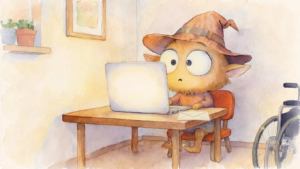
Ambrocius Bodacious Bocephus arrived in El Paso County on a Thursday, which was either a good omen or a bad one — depending on whether you believe in omens, which Ambrocius did, specifically on Thursdays.
He had three things: a very small suitcase, an extremely large sense of civic responsibility, and a hat that was slightly too tall for the altitude. The hat had been a gift. He wore it anyway. This is important to know about Ambrocius — he wears the hat.
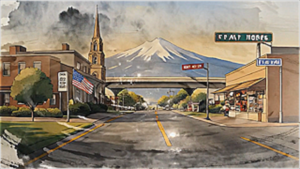
He had chosen El Paso County specifically. Not by accident. Not by algorithm. He had studied. He knew that forty-five thousand men and women in uniform lived here — at Peterson, Schriever, Fort Carson, and inside an actual mountain. An actual mountain. With rooms in it. With people working in those rooms right now.
Then he went looking for a pothole to report.
The Pothole
The pothole found him first. Corner of Omaha and Galley. Five inches deep, twelve across. It got his front left tire on a Tuesday morning and the car made a sound like a question mark.
Ambrocius was not upset. He was prepared. He had Citizens Connect bookmarked — the official county reporting tool, for exactly this kind of thing — saved in a folder labeled Civic Participation, Active. He clicked the link.
Nothing happened.
He tilted his head. He clicked it again, more officially this time, with intention. Still nothing. He cleared his browser cache, which took eleven minutes and did not help. He tried a different browser. He tried his phone. He tried his phone tilted sideways, in case the link was one of those links that only worked at an angle.
He was absolutely certain he was doing something wrong. These were people who maintained infrastructure inside a mountain. Their pothole reporting system worked. He just hadn't found the right way in.
He called 719-385-5173. They said: use the online form. He said: I think — I'm probably doing something wrong, but the link seems like it might possibly be — They said: use the online form.
He thanked them sincerely. He tried the form at the library. On a desktop. On a Wednesday, in case Tuesday was the variable no one had identified.
The Green Chile Newsletter
Something was moving through the planning system near Ambrocius's neighborhood — surveying stakes, two blocks over. Stakes mean something is coming. He found a Subscribe button on the El Paso County website, entered his email, and waited.
The next morning, a welcome email arrived. From the City of Colorado Springs. It had a recipe for green chile stew.
Ambrocius read it carefully. He thought: perhaps this is how it begins. Maybe civic engagement in El Paso County starts with green chile and works its way up. He had never lived near a military installation before. Maybe this was the onboarding. He made the stew. It was good.
No hearing notices arrived.
He subscribed again with a different email. It bounced. He tried a third address — the one he used for important things — and received a confirmation that led to a page that said: this content is no longer available.
He spent forty-five minutes on the county website. Found seventeen departmental pages. A PDF of meeting minutes from 2019. A phone number for a division that no longer existed. The hearing happened on a Tuesday. Ambrocius found out on Thursday.
The Room Before the Room
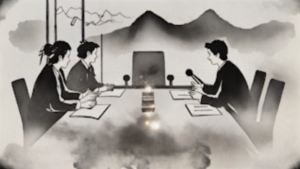
When Ambrocius finally found his way to a Board of County Commissioners meeting — a Tuesday, nine in the morning, Centennial Hall, 200 South Cascade Avenue — he sat in the back and listened. He had prepared a question. He had practiced it. Three minutes, one question, on the record. He was ready.
What he was not ready for was what someone told him afterward, in the parking lot.
He did not know that.
The Planning Commission meets the first and third Thursday of every month. Nine in the morning. 2880 International Circle. It reviews land use applications and development proposals — and it makes a recommendation that then travels to the Board of County Commissioners. The Planning Commission is where the record gets built. It is the earlier conversation. By the time something reaches the Board on a Tuesday, the recommendation is already made.
Ambrocius had shown up to the right address. He had shown up to the wrong moment.
You can submit written comment to the Planning Commission through the county's development review system — at epcdevplanreview.com — at least twenty-four hours before the hearing. That comment gets entered into the official record and handed to every commissioner before they vote. You don't even have to be in the room.
The Portal
The deed was the one that changed things. A property record, filed March 8, 2024. His right to access it was not in question — it was a public record, and he was a member of the public. He went to the Clerk and Recorder's online portal.
Blank screen.
He refreshed. He waited. He came back the next day, and the day after. He bookmarked it and checked every few days for three weeks. He was certain it was maintenance. Scheduled, rigorous. Like what you'd expect from a county that keeps an installation running inside an actual mountain.
He looked for a maintenance notice. There wasn't one. He looked for an estimated return date. There wasn't one. He looked for an accessible alternative for people who couldn't come in person between eight and five, Monday through Friday.
There wasn't one of those either.
He uses a wheelchair.
He wrote a letter. He mailed it. And somewhere between sealing that envelope and dropping it in the box — something shifted. Not anger. Something quieter. The specific feeling of a person who has been trying very hard to believe in a system, and has just run out of reasonable explanations.
Or maybe not.
Courage and Honor
This is where most stories end. Person discovers system is broken. Person is frustrated. Person moves on. Ambrocius did not move on. He kept coming back to one question: If the people who live here put their lives on the line to defend this country — actually defend it, actually sign the paper — then what does it mean that we can't keep the public records portal running?
Every fix below sits within existing, already-allocated budget lines. This is not a request for new spending.
| The fix | Cost | Existing budget line |
|---|---|---|
| Restore Citizens Connect link + accessibility | Staff time — already on payroll | City IT: $22.2M allocated |
| Website accessibility audit | $20,000–$30,000 | City IT: $22.2M allocated |
| Fix hearing notification routing | An afternoon of IT work | County Communications |
| Restore Clerk and Recorder portal | ~$25,000 | Courthouse Infrastructure: $4.5M allocated |
| Publish the Americans with Disabilities Act Transition Plan | $0 — it already exists | No new spend |
| Total within existing budgets | $45,000–$55,000 | Against $530.8M budget |
Then he understood something that a kid had figured out once, writing about six hundred soldiers riding into the Valley of Death, following orders from a leader who had blundered:
Ambrocius had been showing courage. Clicking the link. Trying the form. Making the stew. Showing up to the wrong moment at the right address. That's courage. It doesn't cost much and it doesn't always know where it's going.
Honor was something else. Honor was going back to the county's own website and reading their stated purpose:
Honor was holding that sentence next to the blank portal screen. Next to the bounced email. Next to the nine AM Tuesday that most working people cannot attend. Next to the hearing he found out about on Thursday. Honor was deciding that the gap between those two things was worth naming. Out loud. In a room. On the record.
The Discovery of the Paper Trail
There is a law in Colorado — called the Colorado Open Records Act, or simply CORA — that says most records held by a government office belong to the public. Not to the government. To the public. Anyone can request them. You do not need a lawyer. You do not need a reason beyond: I am a member of the public and I would like to see this.
Ambrocius found this out when he started asking a different question. Not why isn't this working — but what do I have a right to know?
Any accessibility audits the county has run on its own website in the last three years — to find out whether anyone ever checked whether those websites work for people with disabilities.
The county's Americans with Disabilities Act Transition Plan — which counties with fifty or more employees are required by federal law to maintain publicly.
The records of what happened to the Clerk and Recorder's portal — the work orders, the communications, the timeline — to understand how a public records system was unavailable for over a year without a posted explanation.
He also learned that when you submit a request in writing — with a specific date, a specific address, a specific document in the subject line — you create a paper trail. Not just for you. For the county too. They have three business days to respond. Their response, whatever it is, is itself a public record.
The Nine O'Clock Problem
Every public meeting — the Board of County Commissioners, the Planning Commission, the hearings where neighbors could speak and questions could go on record — happened at nine in the morning. Nine on a Tuesday. Nine on a Thursday.
Ambrocius thought about who could attend a nine AM government meeting on a weekday. Retired people. People between jobs. Consultants. Lobbyists. People whose job it was to be in that room. Then he thought about who could not. Teachers. Nurses. Warehouse workers. Parents of young children. People who worked hourly and could not leave without losing pay. Service members rotating through who hadn't yet figured out the system. Veterans managing appointments. Essentially — most of the people the county existed to serve.
He looked up whether evening meetings were allowed. They were. Nothing required these meetings to be held at nine in the morning. It was a choice. It could be a different choice.
We Are the Maintenance
He was not going to fix it himself. He knew that. One person, one notebook, one hat slightly too tall for the altitude — that is not a county IT department.
But he did the math on something else. If four hours a year — just four, less time than a long movie — were given by enough people to this one thing, the pressure would be unmistakable. Not angry pressure. Documented pressure. Named, public, on the record, in writing, with dates on it.
And here is the piece that kept him going: the county has to be compliant to receive its budget. Federal funding — the money that runs the infrastructure line, the courthouse, the whole operation — comes with accessibility requirements attached. The fixes aren't a favor to ask for. They are a condition already embedded in the budget the county already has.
The portal isn't going to fix itself. But the math is getting better every time someone adds their name to it.
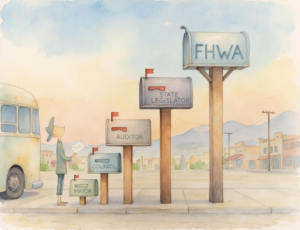
Pick your level of involvement. The email they can ignore. The CORA request they legally cannot. The state legislator moves faster than any filing. The federal complaint is the one with real consequences.
Email the county's Americans with Disabilities Act Coordinator and ask for the Transition Plan. Counties with fifty or more employees are required by federal law to have one. Their response becomes a public record.
Most records held by a government office belong to the public. No lawyer needed. The first two hours of staff time are free. They have three business days to respond.
The Planning Commission is where the record gets built before anything reaches the Board. By the time a project reaches the Board on a Tuesday, the recommendation is already written. Show up here when a project still has opposition.
First and third Thursday of every month. Nine in the morning. 2880 International Circle, Colorado Springs.
You can also submit written comment through the county's development review system at least twenty-four hours before the hearing. That comment goes into the official record and is handed to every commissioner before they vote.
Look up your Colorado House representative and State senator at leg.colorado.gov/find-my-legislator. Type your address. Call constituent services. State your name and address, and describe the portal outage and the ADA Transition Plan. A legislator's office contacting a county department moves faster than any CORA request. Four minutes. No filing required.
Most Tuesdays at nine in the morning. Centennial Hall, 200 South Cascade Avenue, Colorado Springs. Public comment is open. Three minutes. One question is enough. The recording is public. You do not need to know the answer — you need the answer, or the silence, on tape.
Can't come in person? Submit written comment to the Clerk of the Board before the meeting. Written comment becomes part of the official record.
Free. No lawyer required. About thirty minutes. You can file on behalf of a barrier you personally encountered — a broken portal, an inaccessible PDF, a form that doesn't work with a screen reader. The Department of Justice contacts the county. The county must respond. Federal funding compliance is on the line.
This is not adversarial. This is the mechanism designed to work exactly this way.
Questions You Can Ask Tonight
These are the questions that, when asked in a recorded public meeting, create an official record of a gap the county has the money and the legal obligation to close. Pick one. You don't need to know the answer. You need the answer — or the absence of one — on record.
Tap any question to copy it to your clipboard.
The Rooms Where It Actually Gets Decided
These are the public bodies in El Paso County and Colorado Springs where housing, zoning, and development decisions are made. All of them have public comment periods. All of them are recorded. All of them are open to you — and most of the time, nearly empty.
ADA Compliance (David Mejia): ADACompliance@ElPasoCo.com · 719-520-6866
Open Records (Mike Madsen): mmadsen@elpasoco.com · 719-520-6403
Clerk and Recorder (Kristi Ridlen): kridlen@elpasoco.com · 719-520-6226
Communications (Natalie Sosa): nsosa@elpasoco.com · 719-520-5540
BOCC main line: 719-520-7276 · Agendas: agendasuite.org/iip/elpaso
State legislator lookup: leg.colorado.gov/find-my-legislator · Added April 2026
Colorado FOIC (CORA disputes): coloradofoic.org
Send Us What You Find
A response email. A timestamp. A screenshot before a page changes. A note from the parking lot after a meeting. Ground-level detail is what tells us where to look and what question to ask next.
If you record something, grab something, or notice something — send it to us.
We dig from our end. You dig from yours. You are not a passive audience. You are a source. The corridor stays open because people on the ground keep walking it.
"Any fool can have courage. But honor — that's the real reason you either do something or you don't. If you die trying for something important, then you have both honor and courage. And that's pretty good."
The Dais · The Map · Special Edition · Episode Two · El Paso County, Colorado · March 2026
Updated April 5, 2026 — contacts verified, state legislator rung added