




























Separately — and unrelated to these cases — Colorado Statute 39-5-117: if a structure is destroyed by fire, demolition, flood, or other causes outside your control, you have the right to a prorated tax reduction. But you must notify the Assessor before taxes for that year are levied. The Assessor's report is due December 15th. August structure, August call. 719-520-6600.
| Body | Item | Outcome |
|---|---|---|
| BOCC | 7-Eleven #39339B — Fermented Malt Beverage & Wine License Transfer, 1810 Main St | Approved |
| BOCC | Petty Cash Authorization — Budget Year 2026 (Resolution 26-83) | Approved |
| BOCC | Tyler Technologies — Sheriff's Office RMS Annual Maintenance — $150,623.42 | Approved |
| BOCC | Wilson & Company — South Powers Extension Study Amendment — $223,625 | Approved |
| BOCC | Chestnut Springs Holdings LLC — Tax Abatement 2023 & 2024 | Denied 5–0 |
| BOCC | Wind River Place Holdings LLC — Tax Abatement 2024 | Denied 5–0 |
| BOCC | Executive Session — Tax Lien Sale, 6930 Juanita St & 22750 Jones Rd | No Decision |
- Records retention schedule — ask for this first. One document that tells you everything that exists before it disappears.
- Dispatch / CAD system records — every call that comes in, logged.
- Call-for-service logs — volume and type of calls in your neighborhood over time.
- Civil-process logs — how evictions, restraining orders, and subpoenas are actually being served.
- Body-camera metadata — not just footage, but system logs showing when cameras were and weren't activated.
- Call the Assessor immediately after destruction — not at tax season. 719-520-6600.
- Provide your property address and schedule number. Describe what was destroyed and when.
- Ask specifically about proration under Statute 39-5-117.
- Send a follow-up email to create a date-stamped record.
- Assessor report to county treasurer due December 15th of the tax year. August structure, August call.
- Consent Calendar passed 5–0 including $150,623.42 for the Sheriff's Office records system. That system holds a lot you can legally request under CORA (Colorado Open Records Act).
- $223,625 to study South Powers Extension. El Paso County leads the state in fatalities from lane violations. Slow down on Powers.
- Tax abatements denied for Chestnut Springs Holdings and Wind River Place Holdings. But Statute 39-5-117 — if a structure is destroyed, call the Assessor immediately. August structure, August call. 719-520-6600.
- Three state bills being watched: prostitution decriminalization postponed (Ordinance 22-30 stays intact), transit mandate, lot-splitting.
- Sgt. Benjamin Pennington was recognized. First Space Battalion. He was from here.
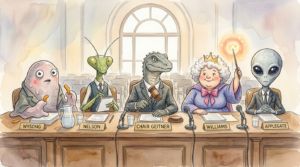
So I read the meeting notes again. All of them. So you don't have to. The Board of County Commissioners met last Tuesday at Centennial Hall — all five commissioners showed up, which in government terms is considered a perfect attendance record and frankly should come with a sticker. They were done by eleven thirty-eight in the morning. Some of us were still in our second cup of coffee. Government... occasionally efficient. Here's what happened.
The first chunk of the meeting was the Consent Calendar. This is the part of local government that sounds boring because it is boring, and also because it is load-bearing. Think of it as the infrastructure of the infrastructure — nobody applauds it, but if it stops working, you notice immediately. A 7-Eleven on Main Street transferred its beer and wine license to new ownership. The county signed off. The Slurpee industrial complex continues uninterrupted. The county authorized petty cash for 2026. Government needs pocket money too. Moving on.
Now here is where the dollar amounts get large enough to warrant a raised eyebrow. Two procurement items cleared the calendar. The first — a purchase order to Tyler Technologies for the Sheriff's Office records management system. Annual maintenance. One hundred fifty thousand, six hundred twenty-three dollars and forty-two cents. That forty-two cents is doing a lot of work in that sentence. That system is how law enforcement tracks case files, incident reports, and records. It is not optional in the way that a fancy coffee machine is not optional — except it actually isn't optional.
Okay. Here is where I'm going to pause, because this is important and most people don't know it. That system — the one the county just paid to maintain — holds more information than most people ever think to ask for. And in Colorado, you have the legal right to ask for a lot of it. It's called a CORA request. Colorado Open Records Act. Most people submit one and only ask for what they already know exists. That's the mistake.
Here's what you can actually request from the Sheriff's Office that most people don't think to ask for. Records maintained in the dispatch and CAD systems — that's computer-aided dispatch — which logs every single call that comes in. Call-for-service logs, which show you the volume and type of calls in your neighborhood over time. Civil-process logs, which track how legal documents — evictions, restraining orders, subpoenas — are actually being served. Body-camera metadata — not just the footage, but the system logs showing when cameras were activated, when they weren't, and what the record says about the gap in between. Internal communication system records, depending on retention. And — this one is the one — records retention schedules and deletion logs. That's the document that tells you how long different categories of records are kept... before they legally disappear.
Ask for the retention schedule first. It's like getting the menu before you order. It tells you everything that exists to request, before it doesn't exist anymore. You can submit a CORA request in writing, by email, or through the Sheriff's public records portal. There's no fee to ask. Put it in writing. Date it. Keep a copy. The clock starts when they receive it.
The second procurement item — a contract amendment with Wilson and Company, engineers and architects, for something called the South Powers extension study. Not-to-exceed two hundred twenty-three thousand dollars. Let's talk about Powers Boulevard for a second, because the numbers here are not subtle. Colorado Springs had over eight thousand reported traffic accidents and fifty fatalities in 2023 alone. El Paso County had the highest number of fatalities in the state specifically due to lane violations. Lane violations. That's the polite term for what happens when someone decides the lane they're in is merely a suggestion. Powers Boulevard comes up specifically in statewide crash data as a corridor where speed is a recurring factor in fatal outcomes. Not a contributing factor. A recurring one. Meaning it keeps happening. Meaning we keep being surprised by the thing that keeps happening.
So two hundred twenty-three thousand dollars to study what to do with that road — before something else gets built on it — is not an extravagance. It is the cheapest possible version of this conversation. In the meantime — and I mean this in the least dramatic way possible — look both ways before you proceed at those intersections. Even when you have the light. Especially when you have the light. The light is not a force field. It is a suggestion backed by mild legal consequences that the other driver may or may not be aware of, depending on whether they're looking at their phone. Slow down on Powers. This has been a public service announcement from the data.
Now we go to the state level, where things are also happening, whether we're paying attention or not. The state briefly considered changing how Colorado handles prostitution law — decriminalization was on the table. It was postponed indefinitely. Done for this session. The commissioners were relieved, and I want to be precise about why, because it's easy to read this as political and it's actually operational. When a law changes, everything built around the old law has to be renegotiated. Enforcement frameworks, local ordinances, licensing structures — all of it has to be reconciled with the new legal landscape. That reconciliation is not automatic. It falls on counties to figure out, mostly on their own, with existing staff, on the existing timeline, in addition to everything else they're already doing. So when a bill doesn't pass, one of the quieter forms of relief is simply... we don't have to do that work right now. The machinery stays aligned. Nobody has to call the county attorney on a Wednesday afternoon and ask what this means for Ordinance 22-30.
Which brings us to Ordinance 22-30. El Paso County has local rules designed specifically for the legal environment that currently exists. It was written to make sure that illegal activity can't operate under the cover of a legitimate storefront — massage businesses, certain service establishments — businesses that, without clear licensing structures, could become difficult to distinguish from something operating under a very different business model. The rules focus on visibility, licensing, and traceability. If you run a legitimate massage practice in this county — and most people who do spent years in school, have actual clients, and are professionals doing a real job — you deal with a layer of licensing requirements that your counterparts in other counties may not face. That's the friction. The ordinance wasn't written at you. It was written around a problem that exists in the same space you operate in, and you ended up in the radius.
There's a transit conversation happening at the state level too. Some proposals would require zero-fare or heavily subsidized transit access tied to certain low-income housing developments. The county's concern is not ideological — it's logistical. If you redirect resources to fulfill a mandate, frequency drops somewhere else. The routes that take Pikes Peak State College (PPSC) students to class and workers to early shifts are the ones that tend to absorb that kind of hit. That's worth watching. And there's a lot-splitting bill the board is monitoring. The idea is to let property owners divide lots more easily to increase housing density. The county's concern is that the bill doesn't account for what's underground — water lines, sewer capacity, infrastructure that wasn't designed for twice the load. The land is just the surface layer. Somebody always has to deal with the rest of it.
Two items from the main agenda were tax abatement cases. These happen when property owners believe their assessed value is too high and want it adjusted. Chestnut Springs Holdings — denied. Wind River Place Holdings — denied. Both five to zero. The County Assessor reviewed the market data from the base year in both cases and concluded the values held up. The board agreed. Now, separately from those cases — something you should actually know. Under Colorado Statute 39-5-117 — if a structure on your property is destroyed... fire, demolition, flood, tornado, anything outside your control — you have the right to a prorated tax reduction for the portion of the year that structure no longer existed. The catch is real, and it has eaten people alive. You have to notify the County Assessor promptly — before taxes for that year are levied. The assessor's report of destroyed properties to the county treasurer is due by December 15th of the applicable tax year. So if your structure burns down in August... you call the Assessor in August. Not November. Not when you're filing taxes. August.
Call the El Paso County Assessor's Office at 719-520-6600. Or go to assessor.elpasoco.com. Give them your property address and schedule number. Describe what was destroyed and when. Ask specifically about proration under Statute 39-5-117. Send a follow-up email so you have a date-stamped record. If you wait too long, you may have legally waived the adjustment. The law does not care that you had other things going on. Write that number down. You probably don't need it today. Hopefully you never do. But if you do — now you have it.
The meeting ended with an executive session. This one involved the potential sale of tax liens on two properties — one on Juanita Street, one on Jones Road. The attorneys were present. Instruction was given to negotiators. Legal advice was provided. No final decisions were made. Sometimes a meeting ends with the paperwork still open. This was one of those times.
One more thing. And this one I'm going to ask you to just sit with for a second. The county recognized Sergeant Benjamin Pennington — First Space Battalion, Fort Carson — who died from injuries sustained at Prince Sultan Air Base. He was the seventh soldier killed in Operation Epic Fury. He was from here. He trained here. He left from here. If you've heard Taps in the afternoon near Peterson Space Force Base and wondered what it meant — that's what it means. It's not the standard lights-out signal. It's military funeral honors. It means someone came home in a way that requires that sound, and someone who loved them is standing at attention in a place they didn't want to be. There is no version of this that belongs in the same document as a 7-Eleven liquor license transfer. And yet here we are, because this is what a week looks like. The ordinary and the unbearable, sharing an agenda. His name was Benjamin Pennington. He was a sergeant. He served with the First Space Battalion. I hope he is the last one.
Here's what you can actually do — organized by how much energy you have left after a Tuesday. Five minutes or less: if your property was destroyed or damaged this year, call the El Paso County Assessor today at 719-520-6600. Don't wait for a better time. There isn't one. Report a pothole by phone — Public Works at 719-385-7458. The portal is still thinking about it. The phone is not. Pick up one piece of trash on your way inside. Colorado Springs, half a million people, one piece each, half a million pieces gone by sunset. The math is embarrassing in the best possible way.
Fifteen minutes or less: submit a CORA (Colorado Open Records Act) request to the El Paso County Sheriff's Office. Start by asking for the records retention schedule — one document, tells you everything that exists before it gets deleted. Put it in writing. Date it. Keep the copy. Look up your county commissioner by district at bocc.elpasoco.com. Save the contact. Don't use it yet if you don't want to. Just have it. It changes how you read the news.
When you're ready: come to a BOCC (Board of County Commissioners) meeting. Tuesdays, 9 a.m., Centennial Hall, 200 South Cascade. Sit in the back. You don't have to say anything the first time. Just be in the room. It will permanently change how abstract local government feels — not in a scary way, more in a these-are-just-people-deciding-what-happens-to-your-street way. Can't make 9 a.m. on a Tuesday? Fair. That is the least convenient time slot that exists. Write your commissioner and ask whether any meetings can move to evenings, even occasionally. It takes two sentences and your address to prove you live there. And when a meeting does get scheduled at a time you can make — bring someone. A neighbor who's never been. Someone who thinks local government is either boring or a conspiracy. It's usually neither.
Check the Colorado General Assembly bill tracker at leg.colorado.gov. The transit bill and the lot-splitting bill are live. Your state representative has an email address. Two sentences is enough — I live in your district, I'm watching this bill, here's what I think. That's a constituent letter.
That's the week. If nothing else, now you've got something to mention at dinner. Fair warning — some of it is dark. Life sometimes is. You don't have to solve anything. Staying aware is enough. If you'd like a small way to help someone directly, there's a community resource link at Pivot True North. Download it, print a few copies, keep them in your car. If you see someone who might need it, just leave one. No speech required. And if you want something even simpler — pick up one piece of trash on your way inside. Small things scale quickly.
Thanks for listening. I'll read the paperwork again next week. You just get home safe.
He was from here. He trained here. He left from here.
There is no version of this that belongs in the same document as a 7-Eleven liquor license transfer. And yet here we are, because this is what a week looks like — the ordinary and the unbearable, sharing an agenda.
I hope he is the last one.