
































El Paso County has around 210,000 dogs. Each one poops twice a day, rain or shine, no complaints, fully committed. Five skipped bags per owner per year — five — equals 725,000 unbagged deposits and roughly 90 tons of bacteria and parasites headed directly for Fountain Creek. Annually. From people who were tired that one Tuesday. The creek kept receipts.
Some of you skipped the bag on purpose. Totally fair. It's organic, it'll break down — not a crazy thought. The problem is rain doesn't wait for decomposition. It just moves. Recycled plastic bag. About a nickel. Earth Rated, Target. Skip the compostable ones. Skip the generic plastic. Recycled plastic is the middle. A nickel. Done.
| Body | Item | Outcome |
|---|---|---|
| BOCC | Engineering Criteria Manual — Appendix I Stormwater Revisions (full rewrite, first update since 2019) | Approved 5–0 |
| BOCC | Stormwater Management Ordinance — First Reading. Fees $100–$1,000. Takes effect May 1. | First Reading 5–0 |
| All Residents | Stormwater ordinance 2nd reading public comment — push for higher fee ceiling on repeat violators | Before May 1 |
El Paso County
at 5 skips/year
per year · Fountain Creek
"The storm drain and the toilet are not the same pipe going to the same place. One goes to a treatment plant. One goes directly to the creek. Nobody taught it. That's the whole problem."
- Storm drains ≠ sewer drains. Storm drains go directly to Fountain Creek with no treatment. Whatever's on the pavement goes with it.
- 210,000 dogs. 5 skipped bags per owner per year. 725,000 unbagged deposits. 90 tons of bacteria. Fountain Creek kept receipts.
- The fix: Earth Rated recycled plastic bags. About a nickel. Target. Skip compostable (they don't get composted). Skip generic (they outlive you). Recycled plastic is the middle.
- Household Hazardous Waste drop-off: 3255 Akers Drive. Free. No appointment for small quantities. Motor oil, paint, antifreeze, pesticides, cleaning products.
- Every stormwater compliance file is a public record — one CORA email to planning@elpasoco.com. Three business days.
- New series coming: The Map. BOCC vs City Council vs Planning Commission — who controls what and why it matters.
"Storm drains. Fountain Creek. 90 tons. A nickel. And a question that turned into a new series."
If you caught Episode 006, you already know what the commissioners were working through. This one's short. There are really just two things.
The first is practical. One of the bigger votes this week was on stormwater — and before your eyes glaze over, here's the part that actually matters to you. Storm drains and sewer drains are not the same thing. When water goes into a sewer, it goes to a treatment facility. When water goes into a storm drain — the one at the end of your street, in the parking lot, along the curb — it goes directly to Fountain Creek. No treatment. Whatever's in it goes with it.
And someone saw you. There is a person on your street, coffee going cold, standing at their window at 6:45 in the morning with nothing else on the agenda. They saw the dog. They saw the moment. They saw you look around and make your choice. They didn't say anything. They're not going to. But they saw you. And now Fountain Creek saw you too.
You have people in this county who can field strip a weapon blindfolded, navigate by starlight, and brief a room of generals without notes. People who can parallel park a truck and have somehow figured out taxes. And yet five times a year, in the dark, the bag stays in the pocket. 725,000 deposits. Roughly 90 tons of bacteria and parasites headed directly for Fountain Creek. Annually. From people who were tired that one Tuesday. The creek kept receipts.
Bag it. And yes — diarrhea days don't count. Nobody's keeping that score. You did your best. The creek understands.
Some of you skipped the bag on purpose. Totally fair. It's organic, it'll break down — not a crazy thought. The problem is rain doesn't wait for decomposition. It just moves. Recycled plastic bag. About a nickel. Earth Rated, Target. That's it. Skip the compostable ones — they rarely actually get composted. Skip the generic plastic — it'll outlive everyone you know. Recycled plastic is the middle. A nickel. Done.
Same goes for the fast food bag that goes airborne at the intersection. It doesn't vanish. It just takes the storm drain downstream and becomes everyone else's watershed. Which is a sentence that should not have to exist.
So if you've also got motor oil, old paint, antifreeze, pesticides, or cleaning products sitting in your garage — Colorado Springs Utilities runs a free Household Hazardous Waste drop-off at 3255 Akers Drive. Open to all El Paso County residents. No appointment needed for small quantities. Next time you're headed that direction, just throw it in the car. Done.
And here's something most people don't know. Every stormwater compliance file in unincorporated El Paso County is a public record. If there's a development near you that's felt off — equipment showing up before permits, drainage that changed, a site that never quite looked right — that file is yours to request. One email to planning@elpasoco.com. Subject: CORA Records Request. One sentence. Date it. Three business days. Episode 006 has the full template. The paper trail exists. It's just waiting for someone to ask.
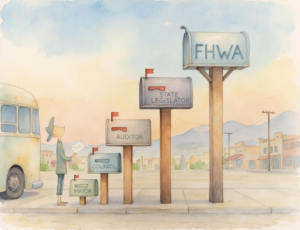
The second thing is a heads up. Next week we're going to try something a little different — a new series called The Map. When you look at local government around here, there are at least three separate bodies making decisions that affect the same geography: the BOCC (Board of County Commissioners), the Colorado Springs City Council, and the El Paso County Planning Commission. Different people, different authority, different rules — sometimes about land sitting right next to each other. We like a challenge. We'll get into it properly next week.
That's the week. You just get home safe. And if you want something even simpler — pick up one piece of trash on your way inside. Colorado Springs has about half a million people. If each person picked up one piece a day, that's half a million pieces gone by sunset. Small things scale quickly.