

















The Money Is Already There
El Paso County operates on a budget of five hundred thirty million dollars. Within existing, already-appropriated budget lines — the courthouse infrastructure fund, the city IT department, county communications — there is more than enough to fix every documented accessibility failure in this guide.
This is not a request for new spending. These fixes sit inside money the county already has, already allocated, already approved. What's missing is the prioritization decision. And prioritization decisions happen in public rooms, on the record, when enough people ask for them by name.
The total cost to fix every documented accessibility failure: $45,000 to $55,000. Against a total county budget of $530,800,000. That is 0.01 percent — inside funds that are already allocated and approved.
Compliance with federal accessibility requirements is also a condition of the federal funding the county already receives. These are not optional improvements. They are existing obligations.
This guide is organized around one principle: four to twelve hours a year from enough people creates a public record the county cannot ignore. Pick one thing. Do it this week. Send us what you find.
Five Failures. Existing Budget.
These are the documented gaps — what's broken, what the law requires, and which already-allocated budget line covers the fix.
| The problem | The law that requires it | Cost to fix | Existing budget line |
|---|---|---|---|
| Citizens Connect link broken. The county's online reporting tool for road issues and accessibility problems is unreachable from the main website and is not navigable by screen reader. | ADA Title II · Section 508 · WCAG 2.1 AA | Staff time — already on payroll | City IT: $22.2M allocated |
| No website accessibility audit. Neither the county nor city has a documented public audit of whether their websites work for people with disabilities. Public comment PDFs cannot be completed by screen reader. | ADA Title II requires programs and services to be accessible. Web content is a service. | $20,000–$30,000 one time | City IT: $22.2M allocated |
| Hearing notifications misrouted. The county email subscription sends residents to a City of Colorado Springs newsletter. Hearing notices don't arrive. Some addresses bounce. | Colorado Sunshine Law C.R.S. § 24-6-402 — public must have reasonable notice of public meetings. | An afternoon of IT work | County Communications — allocated |
| Clerk and Recorder portal down. The online public records portal has been unavailable since early 2025. No maintenance notice, no return date, no accessible alternative for people who cannot come in person. | Colorado Open Records Act C.R.S. § 24-72-201 · ADA Title II — both require accessible public records access. | ~$25,000 | Courthouse Infrastructure: $4.5M allocated |
| Americans with Disabilities Act Transition Plan not published. Counties with fifty or more employees are required by federal law to maintain this document publicly. It is not findable online. | 28 C.F.R. § 35.150(d) — this is a federal compliance requirement tied to the county's existing federal funding. | $0 — publish what already exists | No new spend required |
| Total — within existing, already-allocated budget lines | $45,000–$55,000 | Against $530.8M budget | |
Pick Your Level of Involvement
You don't have to do all of this. Nobody does all of this. But if enough people each do one thing, the county has to respond — because the law requires it and the budget already covers it.
Email the county's Americans with Disabilities Act Coordinator. Ask for the Transition Plan that federal law requires them to maintain and publish. Their response — whatever it is — becomes a public record you can share.
Most records held by a government office belong to the public. No lawyer needed. No reason required beyond being a member of the public. The first two hours of staff time are free. They have three business days to respond.
The Planning Commission is where the record gets built before anything reaches the Board of County Commissioners. By the time a project reaches the Board on a Tuesday, the recommendation is already written. The Planning Commission is the earlier conversation — and in some ways the more important one.
First and third Thursday of every month. Nine in the morning. 2880 International Circle, Colorado Springs.
You can also submit written comment through the county's development review system at least twenty-four hours before the hearing. That comment gets entered into the official record and handed to every commissioner before they vote. You don't have to be in the room.
Most Tuesdays at nine in the morning. Centennial Hall, 200 South Cascade Avenue, Colorado Springs. Public comment is open. Three minutes. One question is enough. The recording is public. You do not need to know the answer — you need the answer, or the silence, on tape.
Can't come in person? Submit written comment to the Clerk of the Board before the meeting. Written comment becomes part of the official record.
Sign up for real BOCC agendas at agendasuite.org/iip/elpaso — this is the actual agenda system.
Free. No lawyer required. About thirty minutes. You can file on behalf of a barrier you personally encountered — a broken portal, an inaccessible PDF, a form that doesn't work with a screen reader. The Department of Justice contacts the county. The county must respond. Federal funding compliance is on the line.
This is not adversarial. This is the mechanism designed to work exactly this way.
Questions You Can Ask This Week
These are the questions that, when asked in a recorded public meeting, create an official record of a gap the county has the money and the legal obligation to close. Pick one. You don't need to know the answer. You need the answer — or the absence of one — on tape.
Select any question to copy it to your clipboard.
The Rooms Where It Actually Gets Decided
All of these bodies have public comment periods. All of them are recorded. All of them are open to you — and most of the time, nearly empty.
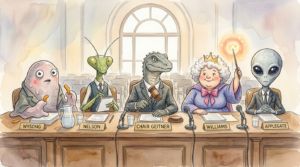
District 1 — Northern El Paso County: Holly Williams (final term, 2026)
District 2 — Northern and Eastern: Carrie Geitner, Chair 2026
District 3 — Western: Bill Wysong
District 4 — Eastern and Southern: Cory Applegate
District 5 — Central: Lauren Nelson, Vice Chair 2026
BOCC main line: 719-520-7276
The Real Names. The Real Emails.
Forms don't always confirm receipt. These contacts are verified from the county's own public pages. Email directly — it creates a paper trail on both ends.
For open records requests
For accessibility and the Clerk and Recorder portal
For department-specific records
Send Us What You Find
A response email. A timestamp. A screenshot before a page changes. A note from the parking lot after a meeting. Ground-level detail is what tells us where to look and what question to ask next.
If you record something, grab something, or notice something — send it to us.
We dig from our end. You dig from yours. You are not a passive audience. You are a source.