















 Story Seed Studios · Colorado Springs, CO · Est. 2026
We read the agenda.
So you don't have to.
A civic audio and video studio making local government legible — for anyone who lives here, passes through, or just wants to know what the room looks like before they walk in. Occasionally we follow a thread further than the agenda intended.
About Story Seed Studios
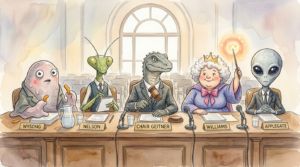
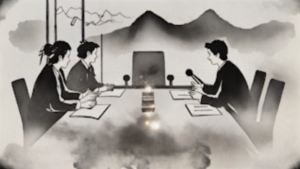
StorySeed is a civic audio and video project based in Colorado Springs. The Dais is its flagship series — local government, explained like a human being did the explaining.
We cover what is actually on the agenda each week. Funding decisions, board votes, budget gaps, and the organizations whose work depends on those decisions going a certain way. We read the minutes, find the number that doesn't add up, and say so out loud.
The Import Economy is our long-form essay series on human trafficking along the I-25 corridor, the local government structures that respond to it, and the financial decisions that connect personal choices to civic ones. The Map is a special edition series on housing, civic geography, and who controls what — and why that matters to everyone who lives here, even temporarily.
"This is not journalism. There is no editor, no newsroom, no institutional backing. There is one person with a communications degree that took seven years and a D in Government the second time around."
Take everything here as a starting point, not a verdict. The Dais is the first project. We wanted to see how it goes. So far, it's going.
We are not affiliated with El Paso County government or any of the organizations we cover. We have no advertisers. Nobody is paying us to say nice things about anyone.
The work is independent, free to access, and occasionally funnier than a government meeting has any right to be.
No — and the distinction matters. Journalism has editors, fact-checkers, legal review, and institutional accountability. StorySeed has none of those things. What it has is a person who reads the agenda every week and says what they found in plain English.
Think of it as civic orientation, not reporting.
We do not endorse candidates. We do not have a party affiliation. We do not tell you how to vote. We do point out when organizations serving vulnerable people are underfunded and when the gap between what was requested and what was approved has real consequences.
If you find that political, we understand. We find it Tuesday.
Everything we make
All Series →


4 to 12 Hours a Year.
That is the entire ask. Not activism. Not a career change. Not becoming the kind of person who has opinions about parliamentary procedure. Just showing up more than once — and leaving a record that you were there.
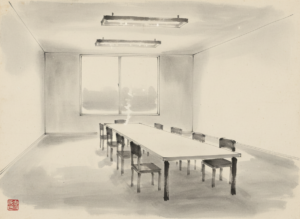
The Community Development Advisory Committee meets the 3rd Wednesday of every month, 12:30 PM, 9 E. Vermijo Ave. Walk in. Sit down. You do not have to say anything. Presence is the first move, and the room is almost always empty. Can't go? Ask for later hours.
Research one organization they fund. Find the gap between what was requested and what was approved. Write two paragraphs. Submit it. Your name is now in a public record. That is a civic credential.
One meeting every other month. Reference your previous comment. The board will begin to recognize your name. That is when things shift — not because you became powerful, but because you became consistent.
Forward an episode. Show someone the volunteer guide. Leave a community resource guide in your car. Colorado Springs has half a million people. If ten of them showed up to that room consistently, the room would feel different.
If you're only here for a while — it still counts.
Colorado Springs has roughly 45,000 active duty, guard, and reserve military rotating through every 2 to 4 years. Add civilian contractors, students, and people in between. At any given moment, a significant portion of this city is not planning to stay.
This is addressed directly to you: the fact that you're temporary doesn't make your presence irrelevant. The decisions being made in these rooms right now will shape this city for decades. Whether or not you're here to see it, you are here now. And the room is nearly empty.
Four hours is not a commitment to this city's future. It's one afternoon. One meeting. One written comment before you PCS to the next assignment. The record of your participation stays in the public file long after you're gone.
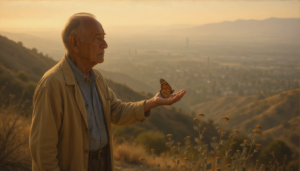
The man on the hill in Topanga couldn't bring the monarchs back. But he named what was lost. That was something. You can name something too — while you're still here to see it.
Attend one public meeting
No application. No credentials. Walk in, sit down, listen. The BOCC meets most Tuesdays at 9 AM · 1675 W. Garden of the Gods Rd. The Community Development Advisory Committee meets the 3rd Wednesday at 12:30 PM · 9 E. Vermijo Ave.
Check the next agenda →Understand the BAH feedback loop
The Map explains how military BAH connects to local rent prices, who benefits from the system staying invisible, and which public questions have never been asked out loud. Designed for anyone — including people who just got here.
Watch Episode 1 →Apply for a board or commission
There are open seats on county boards right now. You do not have to be a permanent resident to serve in many advisory roles. Volunteer experience here is transferable — a reference letter from a county board chair means something at the next duty station too.
See open positions →You've seen the end of a different movie
If you came here from a high-cost city, you already know what happens when a place scales without paying attention. That knowledge is genuinely useful. Show up to the meetings. Talk to the neighbors who've been here 30 years. Be the person who helps build the institutional memory before it's gone.
The Map — Episode 1 →Quick resources
Fair questions
That is exactly what we want. Use the upload link and include a note about the meeting name, date, and what specifically confused you. We will go through it, translate the relevant parts into something a human can understand, and turn it into an episode or use it to inform one. You do not need to understand it. That is our job.
The Import Economy series and The Dais are specific to Colorado Springs and El Paso County. The civic engagement playbook — the 4 to 12 hours framework, the meeting attendance approach, the written comment strategy — works in any American county. The letter templates work anywhere.
If you want to do something similar in your city, email us. We will tell you everything we know.
Start with four hours. One meeting, one written public comment. No application required for most meetings — you walk in, you sign in, you sit down. Try it once before you decide anything about it.
If you want to apply for an official board position, El Paso County has a formal process at bocc.elpasoco.com/volunteer or email Volunteer@elpasoco.com. Formal positions require more. Attending a public meeting requires a Tuesday afternoon and the ability to find parking on Vermijo.
Yes. The public comment you submit stays in the official record permanently — long after you PCS. The funding decisions being made right now will affect this community for a decade. You are here for those decisions. That is not nothing.
Practically: board participation looks good on a performance review, a reference letter from a county board chair is transferable, and the civic skills — reading a budget, writing a public comment, understanding how funding flows — go with you everywhere. The 4 to 12 hour framework was specifically designed with rotational populations in mind. Four hours is one afternoon. You can do four hours.
StorySeed Studios is an independent project based in Colorado Springs. It is run by one person. It is free. It is not affiliated with any government agency, political party, or organization whose funding depends on saying the right things about anyone.
The why: a series of local government meetings, a funding committee agenda, a number that didn't add up, and a persistent feeling that the people in that room were making consequential decisions in front of nobody. The Dais is the first project. We're watching how it goes.
Yes. Email hello@storyseedstudios.com and tell us what you have and how much time you have. We probably have a use for both. Research, transcript review, editing, outreach, and curriculum development are all things that happen here and that more hands would help.
Four ways to connect.
Pick the lane that fits what you actually want to do.
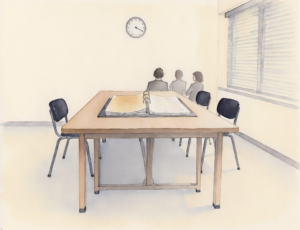
"The room is open to the public. Most of the time, nobody's in it. You don't have to solve anything. Staying aware is enough. But if you want to do something small — that's the room."