


























“When somebody says the government should just use the surplus to fix the road, the honest follow-up is usually three questions in a trench coat. Which government? Which budget? Is it actually surplus, or is it already promised?”
After Sheriff Roybal’s dispatchers stepped down from the dais (that was 011A), the next item was the Q4 report. Presented by Nikki Simmons, the County’s Chief Financial Officer.
And before we go a sentence further: Nikki Simmons is a fantastic name for a lead accountant. Rockstar name, rockstar job. Her team produces these reports on schedule, audited, public-facing, with footnotes you can actually trace. The whole reason a show like this is even possible — the reason we can sit here and talk about whether the numbers add up — is because someone at the County is doing the underlying math correctly and on time. Thank you, Nikki. Genuinely. The County would be measurably better off with ten more of you.
Sounds boring, is actually pretty good. Revenues came in slightly higher than planned. Not by a lot — just enough to suggest the planning was honest.
Underneath:
Sales tax: $5.25M below projection. Same softening we’ve been tracking. Not a crisis, but a signal.
Interest income: $3.36M over budget. When the federal funds rate stays high, the County’s reserves earn more sitting in the bank. Free money, basically. They didn’t engineer it — they were just positioned to catch it.
Clerk & recorder fees: $2.6M over budget. Clerk fees go up when people refinance, which goes up when interest rates dip even briefly. Two threads, same root cause, both went the County’s way.
On the spending side, the County underspent its general fund by about $53M. Most of that — $42.1M — is projects already in progress that got rolled forward into 2026. Not money saved. Money still committed, just not yet spent. The other $11M went to fund balance: $3M above plan. That’s the real new money.
Now. I have to stop and acknowledge the number.
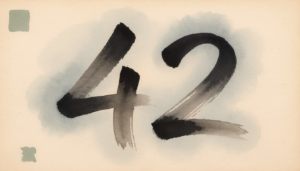
Forty-two million dollars. Underspent.
For anyone who’s read The Hitchhiker’s Guide to the Galaxy, that number is supposed to be the answer to life, the universe, and everything. Douglas Adams set up an elaborate joke about a supercomputer running for seven and a half million years to spit back a single number with no question attached. Forty-two. And here it is, on page whatever of the County’s Q4 unaudited budget report, in roughly the same context — a number that sounds enormous, that means something, but doesn’t quite tell you what.
Any number can mean anything depending on the frame. $42M is a fortune in someone’s living room. It’s also less than 5% of the County’s general fund. The frame matters.
Two things going on. First — that $42M isn’t sitting in a bank account waiting for somebody to spend it. It’s already promised. Committed to projects in motion. Money owed, not money saved.
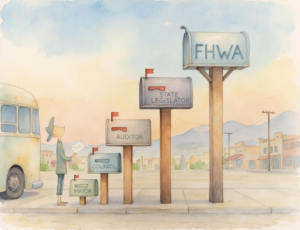
Second — and this is the bigger one — Colorado Avenue is a city project, not a county project. Different government, different budget, different rules. The County cannot hand money to the City for a City road, any more than your neighbor can pay your mortgage just because they had a good month. The County spends on county things — county roads, the jail, county parks, public health, human services. The City spends on city things — city roads, fire, police, parks inside city limits. They share a tax base. They do not share a checkbook.
Different government, same week. The City leans heavily on sales tax. When sales tax softens, the City feels it harder than the County.
The number the Mayor put out there: $31M. Cumulative savings target going forward. Context: the City has been navigating annual shortfalls. $9M in one recent year. $11M in another. $4M in a third. The $31M is the forward-looking commitment to keep finding savings rather than asking residents for more.
Honest broker note: we are still pulling the underlying numbers. These figures got presented at the briefing without the spreadsheets. We want to verify before saying anything definitive. What I can say is that the man gives an excellent speech. His suits are remarkably well-tailored. His Instagram is worth a follow — Mayor Yemi Mobolade, look him up. The human being doing the talking is doing it with care, conviction, and excellent lapel work. The numbers we’ll keep digging on. The communication style is already a public good.
Public safety stays funded. Period. That’s the floor. Which is why crime trends and response times kept improving even while the budget got tighter. Other departments absorbed the hit so police and fire wouldn’t. No public-safety sales tax ballot this year — polling shows inflation concerns outweigh appetite for new taxes.
Voters specified the money goes to public safety, mental health, and post-traumatic stress support. That’s where it’s landing. A fire academy got funded. $700,000 went to the Downtown Partnership’s Clean & Safe program — which means, circling back to 011A, when Pat Rigdon walks his blocks, part of what funds his work is a tax on a substance that didn’t exist in the City budget five years ago.
If you don’t catch the reference earlier in the episode: Friday, the 1995 movie. Ice Cube and Chris Tucker. If you’d told the writers in 1995 that thirty years later a city in Colorado would be funding fire academies with tax revenue from the substance Smokey was so committed to — they would have written that movie too.
Funding public services with a single dedicated revenue stream is a strategy that’s been tried before. Florida voters approved the Lottery in 1986, specifically to fund education. Since 1988 it’s contributed over $47 billion. Genuinely funded the Bright Futures Scholarship Program — close to a million students.
The catch nobody at the cash register tells you: those $47B are only ~6% of Florida’s total education budget. Researchers at Georgia State have documented that lottery revenue has largely replaced state education funding rather than added to it. Florida ranks bottom third on per-pupil spending.
Not saying that’s right. Not saying that’s wrong. Saying it happens. When a dedicated revenue stream gets attached to a popular cause, the temptation for the general fund to back away from that cause is real, and the public usually doesn’t notice because headlines focus on the dedicated number, not the offset.
So when $700K of marijuana revenue went to Pat Rigdon’s program — that’s good. Genuinely. We just want to make sure the City’s general-fund commitment to homelessness and public safety doesn’t quietly shrink by $700K at the same time. That’s the math worth watching. Not in 011B. Some future budget cycle.
Quick correction from 011A: the town hall announcement was made by Gail Sturdivant, the City Engineer. Councilwoman Williams was there; Sturdivant presented. Credit where it’s due.
Phase 1 — Limit Street to 30th — takes Colorado Avenue from four lanes to three with a center turn lane. Standard road diet. FHWA research documents up to 29% crash reduction on similar restripings.
Phase 2 puts flexible delineators in Old Colorado City to test what a 2022 Midland Trail Corridor Study recommended. Cheap, reversible. They’ll collect data before committing to permanent infrastructure.
Plus traffic calming at Doorndale Park — bump-outs at 23rd and 24th, dynamic speed sign west of 21st. Those signs typically reduce average speeds by 2–6 mph. Doesn’t sound like much. Changes outcomes meaningfully when you’re talking about a kid stepping off a curb.
The funding: federal transportation grant (specific program TBD — we want to verify before naming it) plus PPRTA (Pikes Peak Rural Transportation Authority — a 1% regional sales tax voters in Colorado Springs, Manitou Springs, Green Mountain Falls, and unincorporated EPC approved in 2004). Almost none of this comes out of the City’s general fund. Sales tax you spent on coffee in 2005, that you forgot about, that voters in four jurisdictions approved together — paying for a road diet in 2026.
“Money is boring. Until it isn’t. And then it tends to be the thing on your credit card bill at the end of the month that you don’t remember authorizing, and suddenly it’s the most interesting thing in the world. Same with a city budget.”
vs. 2025 budget
forward (committed)
(target: 24%)
target (forward)
revenue · year 1
Clean & Safe
The speeches behind tonight’s figures — Nikki Simmons at the dais, the Mayor’s briefing, Gail Sturdivant presenting Colorado Avenue — are genuinely good. Warm, specific, competent. We’re not trying to replace them.
cheetochopsticks.com is just where we’re putting the underlying numbers together for data-driven reference — so you can verify a figure, layer it against other data, or look at it on your own schedule. It’s a work in progress. There are gaps. We’ll keep filling them.
Speeches and spreadsheets do different work. This show tries to help both exist.
Nikki Simmons · El Paso County Chief Financial Officer · presented the Q4 2025 report
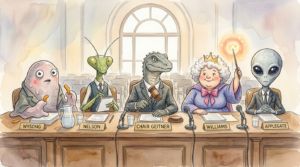
Chair Carrie Geitner · District 2 · 2026 Chair
Vice Chair Lauren Nelson · District 5 · also framed the split assessment rate correctly in Q4 context (held for show notes)
Mayor Yemi Mobolade · City of Colorado Springs · gives an excellent speech
Gail Sturdivant · City Engineer · presented Colorado Avenue at the OWN Town Hall
Pat Rigdon · Downtown Partnership Clean & Safe · part of his work now funded by marijuana revenue (referenced from 011A)
Split assessment rate. Starting with 2024 taxes (payable 2025), schools assess residential property at a higher rate than other local governments. On a $1M home: county at 6.25% / schools at 7.05%. Vice Chair Nelson framed it correctly — not a windfall for schools, but the state reducing its backfill obligation. Worth its own Map episode eventually.
ARPA hard deadline: December 31, 2026. Funds had to be obligated by December 31, 2024.
- County: Q4 at 100.4%. $42.1M rolled forward (the Douglas Adams number). Reserves at 26% (target 24%). Unaudited; final in June.
- Mayor: $31M cumulative savings target. $9M/$11M/$4M shortfalls already absorbed. No public-safety sales tax ballot this year.
- Marijuana: $3.8M in year one. $700K to Downtown Clean & Safe. Voter-directed to public safety, mental health, PTSD.
- Florida Lottery: $47B since 1988 but only ~6% of FL education budget. Substitution effect. Math worth watching with marijuana revenue.
- Colorado Ave: PPRTA + federal grant. 4→3 lanes, up to 29% crash reduction. Almost no City general fund.
- Tomorrow: 011C — The Systems.
1 — The County’s Q4
Nikki Simmons presented the County’s Q4 2025 budget report at the Tuesday BOCC meeting. General fund finished at 100.4% of budget — revenues slightly ahead of plan. Sales tax came in $5.25M below projection (the soft signal we’ve been tracking), but interest income ran $3.36M over and clerk fees $2.6M over (both tied to the high-rates environment). Report is unaudited; final version in June.
2 — The $42M Thing
The County underspent its general fund by about $53M. Most of that — $42.1M — is committed projects rolled forward to 2026. Not surplus. Only $11M went to fund balance, which is $3M above plan. That’s the real new money. Reserves ended the year at 26% against a 24% target — comfortable buffer for 2026.
3 — The Mayor’s $31M
Different government, same week. The City leans on sales tax more than the County does, so it feels the softening harder. Historical shortfalls the City has already absorbed: $9M, $11M, $4M across recent years. The Mayor’s forward-looking commitment is $31M in cumulative savings rather than asking residents for more. No public-safety sales tax ballot this year — polling shows inflation concerns outweigh appetite. Public safety preserved as the floor; other departments took the cuts.
4 — Marijuana Revenue & the Florida Lottery Caveat
Recreational marijuana sales brought in roughly $3.8M in year one. Voter-directed to public safety, mental health, PTSD support. A fire academy got funded. $700K went to Downtown Partnership Clean & Safe (Pat Rigdon, from 011A). The honest-broker caveat: Florida approved its Lottery in 1986 to fund education. $47B+ contributed since 1988, but only ~6% of FL’s total education budget — researchers have documented a substitution effect where general-fund spending quietly stepped back. Florida ranks bottom third on per-pupil spending. The math worth watching with marijuana revenue: does the City’s general-fund commitment to homelessness and public safety quietly shrink by $700K at the same time?
5 — Colorado Avenue
Phase 1 (Limit to 30th) takes the corridor from four lanes to three with a center turn lane. FHWA research documents up to 29% crash reduction on similar restripings. Phase 2 uses flexible delineators in Old Colorado City to test a 2022 corridor study recommendation. Plus traffic calming at Doorndale Park. Funding: federal transportation grant + PPRTA (the 1% regional sales tax voters in CS, Manitou, Green Mountain Falls, and unincorporated EPC approved together in 2004). Local property tax dollars are not the primary source.
6 — The Map: Reading Glasses
Subseries plug: the newest Map episode, Reading Glasses, walks through 23 years of City of Colorado Springs financial reports: voter-tax stack, GASB 75 (the worst-named accounting rule on Earth), pension reality check against California cities that went bankrupt. Evergreen. No homework either way. The place for the long version if tonight left you wanting more depth — not less.
Tomorrow — the systems side of the same week. The City’s road safety plan that almost nobody got to comment on (the comment platform was broken for 7–8 days of the 21-day window). An open letter to the City’s Traffic Engineer. Two drainage meetings (April 29 + May 7). Pothole reporting experiment — 2 of 3 tools work. Four dashboards — 2 live, 2 in progress.