The story
The Man on the Hill
He was almost 80, with a butterfly farm in Topanga, California. His family had lived in Los Angeles for decades. He knew the hills the way people only know a place when they've watched it change.
On a hike together, he stopped at the top of a ridge, looked out across the hills, and said something quiet and devastating.
"This place used to be filled with monarch butterflies — before they go to Mexico, they stop here. There was a native plant they fed on. It's gone now. And so are they."
— A hotel owner, Topanga, California
He wasn't angry. He was literate. He could name what had disappeared and when and why. That's a rare and valuable thing.
California, he said, was built on entertainment. A transient industry for a transient population. It scaled fast — faster than anyone stopped to ask what was already there. Nobody pulled out the native plants out of malice. They just built something at speed, and the monarchs found nothing to stop for.
And now the people are leaving. Not all of them — but enough. Chasing lower costs, more space, a different kind of life. And some of them are landing in Colorado Springs.
This story is about what happens when a place doesn't pay attention to its own corridor. And what you can do before the monarchs stop coming.
Who's arriving
It's Not About Where People Are From. It's About What They Expect.
Let's be honest about something: people moving to Colorado Springs come from everywhere. Texas. The Midwest. The Southeast. Other military rotations from bases across the country — from San Diego, from the DC corridor, from bases in high-cost states where rent ate half their paycheck.
The California story is real as a metaphor. As a demographic claim, it's incomplete. There's no clean data that says Californians specifically are the dominant driver of price pressure here. What is true — and this is the part that matters — is the pattern that the man on the hill was describing.
The pattern
When people arrive from higher-cost places — wherever those places are — they carry expectations about what housing costs and what gets built. The market responds to those expectations. Prices adjust upward. Developers build to the new ceiling, not the old one. The people who were already here, whose wages were calibrated to the old market, find themselves priced out of their own corridor.
That's not a California story. That's a demand-and-expectations story. And it's playing out in Colorado Springs right now, across every price band, in every zip code.
The specific driver of that demand pressure that nobody talks about enough? The military.
The system underneath
What Is BAH, and Why Does It Matter?
BAH stands for Basic Allowance for Housing. It is a monthly cash payment the military gives service members to cover off-base rent. The amount varies by rank and whether you have dependents — and here is the critical detail: it is set based on what the local rental market actually charges.
2025 BAH rates — Colorado Springs
What a service member receives each month toward housing, by rank:
E5 w/ deps
$2,340
per month
E6 w/ deps
$2,382
per month
E7 w/ deps
$2,445
per month
O1E w/ deps
$2,451
per month
Here's the loop nobody told you about: BAH is calculated based on local rents. Local rents go up partly because landlords and developers know 45,000 military households have a government-issued housing allowance in their pocket. So BAH goes up to match. Then rents go up again to meet the new BAH ceiling. There is no brake on this system. It is a feedback loop between military housing demand and local market pricing — and it runs whether or not anyone is watching.
The military doesn't assign service members to specific apartments. It hands them money and says go find something. So 45,000 people — rotating in and out every 2 to 4 years, none of them planning to stay, all of them needing housing immediately — are independently competing in the same rental market as everyone else who actually lives here.
That is a structural feature of this city. It was not designed. It was not planned. It just is. And it shapes everything downstream.
The real problem
The Data That Doesn't Exist
Here is what you can actually find out, right now, with public information:
What we can see
✓~4,488 homes currently listed for sale
✓~3,831 short-term rentals on platforms like Airbnb
✓~900–1,200 affordable units built with tax credits
✓512 active development projects in the pipeline
✓BAH rates by rank, updated annually
✓HUD fair market rents by bedroom count
What we cannot see
✗What percentage of existing apartments have tenants right now
✗How long new buildings take to actually fill after construction
✗How many units sit empty while developers wait for prices to rise
✗Whether affordable units are actually renting to the incomes they were built for
✗How many military families are doubled up because on-base housing is full
✗Real-time vacancy rates by neighborhood or price band
That right column is not a technical limitation. Some cities collect and publish this. Apartment industry trade groups collect it privately — and sell it to developers. The data exists somewhere. It is just not in public hands in Colorado Springs.
So when someone at a BOCC meeting says there's a housing shortage — they might be right. When someone says we're overbuilding — they might be right. When someone says public money is being well-spent on affordable units — they might be right. None of them can prove it. Because the one number that would answer all of those questions — what percentage of housing is actually occupied right now — is not tracked publicly.
You're not being told lies. You're being told incomplete truths in a room with no windows.
Everyone is moving pieces. Nobody can see the board. And the question worth asking — the uncomfortable one — is who benefits from the board staying invisible. Because the absence of this data is not an accident. It is a choice. And choices have choosers.
Follow the names
The Room Where Decisions Get Made — and Who's In It
While the data stays invisible, some things are very visible. The names on the agenda. The consultants in the room. The commissioners who left and came back wearing different hats.
Most live right now
Mark Waller served as District 2 Commissioner. He is now a paid consultant representing Vertex — the Buc-ee's developer — appearing before the same board he used to sit on.
When his name appears in an agenda, that is not an allegation. It's a fact. And the script line that states it plainly — "The application is being represented by Mark Waller — who, if the name sounds familiar, previously served on this same board as commissioner for District 2" — is exactly the kind of sentence that public officials prefer nobody says out loud.
The District 2 lineage alone is instructive. Amy Lathen left her commissioner seat six months early to run a PAC. Mark Waller came in from the state legislature and is now a consultant. Carrie Geitner is the current Chair. Three consecutive commissioners, all from overlapping civic networks, all of whom moved fluidly between public authority and private influence.
Cami Bremer, District 5, collected roughly $300,000 across her commissioner salary and her incoming CEO role at Pikes Peak United Way during her transition period — before resigning in January 2025. Lauren Nelson, a former school board member and food scientist, was appointed to fill the vacancy and is now Vice Chair.
None of this is illegal. None of it is unusual in local government anywhere. But it is the structure of the room where housing decisions get made. Knowing who walks in, and what they were before they got there, is how you understand why certain questions never get asked.
What you can do
You Are Not Helpless. You're Just Getting Started.
The man on the hill in Topanga wasn't helpless. He had a butterfly farm. He was doing what he could, in the space he had, with what he understood. He couldn't bring the monarchs back. But he could name what was lost — and he could tell the right person on a hike.
Literacy is the first action. You don't have to save the whole corridor. You just have to know which plant to keep.
Pick your level of involvement:
Go to one public meeting and just listen. Planning commission. Zoning hearing. BOCC session. You don't have to say anything or understand everything. You just have to be a body in the room that isn't a developer, a consultant, or a commissioner's friend.
Public meetings in El Paso County are often attended by the same 12 to 15 people. Adding one more person who isn't on a payroll genuinely changes the composition of the room. Your presence is itself a signal.
→Grab the agenda packet on your way in. Take a photo. These documents are public record and often contain financial numbers, project names, and consultant disclosures that never make it into the official transcript.
Pick one metric and watch it for a year. BAH rates. The number of homes listed. The LIHTC unit count. You will know more about your local housing market than almost any elected official is counting on you to know.
Knowledge held by citizens is the only thing that makes public data inconvenient to ignore. You don't need a spreadsheet. You need to be the person in the room who can say, "that number was different six months ago."
→HUD publishes BAH rates annually. El Paso County posts meeting agendas and some financial documents publicly. The county assessor has parcel and ownership data. Start with one of those three.
At a public meeting — calmly, plainly, without drama — ask a question that should have an answer and doesn't. When the response is "we don't track that," that answer, stated publicly in a recorded meeting, is itself a news event. The data gap becomes part of the official record the moment someone asks about it out loud.
You do not need to know the answer. You need the absence of an answer to be on tape.
→Public comment is typically 3 minutes. One clear question is better than three. Practice it before you go. The question list below was built for exactly this moment.
You are not the villain of this story. You don't have to perform penance for moving here. But you carry something genuinely useful: you have watched what happens when a place scales without paying attention. You've lived the sequel.
Use that. Show up to the meetings. Talk to your neighbors who've been here 30 years. Ask what used to be here. Be the person who helps build the institutional memory this place needs before it loses it.
→The people who remember what Colorado Springs used to be are still here. They know which plants are already gone. Find them before you assume you know what needs to be built.
Walk in ready
Questions You Can Ask Tonight
These are the distillation of three hours of research into the questions that, when asked in a recorded public meeting, force the right kind of accountability. Pick one. You don't need to know the answer. You need the answer — or the absence of one — on record.
Tap any question to copy it to your clipboard.
On vacancy and utilization
"What is the current vacancy rate for rental units in this price range?Copied
"How long is the average lease-up period for new developments in this area?Copied
"Do we track how many units are sitting unoccupied after construction is complete?Copied
On military housing and BAH
"What percentage of BAH-range units are currently occupied?Copied
"How does on-base housing occupancy affect demand for off-base rentals?Copied
"Is there any coordination between the county and local installations on housing timing and supply?Copied
On public money and accountability
"What is the public subsidy amount per unit for this project?Copied
"How will we measure whether this development actually served the income levels it was built for?Copied
"Who tracks outcomes after a subsidized project is approved and built?Copied
On the data gap — the most powerful questions in the room
"Where can the public access real-time vacancy data for this county?Copied
"If that data doesn't exist publicly — who would be responsible for collecting it?Copied
"Has the county ever commissioned a housing utilization study, and if not, why not?Copied
Where to go
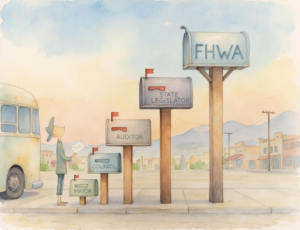
The Rooms Where It Actually Gets Decided
These are the public bodies in El Paso County and Colorado Springs where housing, zoning, and development decisions are made. All of them have public comment periods. All of them are recorded. All of them are open to you — and most of the time, nearly empty.
County — highest authority
El Paso County Board of County Commissioners
Meets most Tuesdays at 9 AM — Centennial Hall, 1675 W. Garden of the Gods Rd. This is the main stage. Zoning appeals, major developments, budget. The BOCC is where things become final.
elpasoco.com/boccCounty — catch it early here
El Paso County Planning Commission
Meets monthly, typically the third Thursday. Reviews land use applications before they reach the BOCC. This is where to show up when a project still has opposition — before it has momentum and a vote already lined up.
elpasoco.com/planningCity of Colorado Springs
Colorado Springs City Council
Meets most Tuesdays at 1 PM — City Administration Building, 30 S. Nevada Ave. Handles city-limit zoning, housing programs, city budget. Distinct from the county — know which jurisdiction your project falls in before you show up.
coloradosprings.gov/city-councilCity — catch it early here
Colorado Springs Planning Commission
Meets monthly. Reviews city zoning and development applications. Same role as county planning — the place to show up before a project becomes inevitable.
coloradosprings.gov/planningAffordable housing — state level
Colorado Housing and Finance Authority (CHFA)
Board meets quarterly in Denver. CHFA administers the LIHTC tax credits and tax-exempt bonds that fund affordable development statewide — including projects in El Paso County. Their meetings are public and cover project approvals.
chfainfo.comOften overlooked — worth knowing
Metropolitan District Meetings
New developments often create their own metro districts — quasi-governmental bodies that levy property taxes and issue bonds. Meetings are technically public and almost never attended. Budgets can run into tens of millions. Search the county clerk for your area's district.
elpasoco.com/clerk
The simplest thing you can do today
Sign up for BOCC and Planning Commission agendas by email. The agenda drops a few days before the meeting and is often the first public signal of what's coming. A name that appears on an agenda today may be in front of the board for a vote next Tuesday — and gone from the public record the Tuesday after.
You're a source
This is a team effort
We review transcripts — but systems miss things. A timestamp. A photo of an agenda item. A voice memo from the parking lot. A screenshot before a document disappears. That ground-level detail is often what tells us where to look and what question to ask next.
If you record something, grab something, or notice something — send it to us.
We dig from our end. You dig from yours. You are not a passive audience. You are a source. The corridor stays open because people on the ground keep walking it.