






















There Is Not a Lot to Do on a Friday Night
There is not a lot to do on a Friday night in Colorado Springs.
This is not a complaint. It is an observation made by two people who chose Colorado Springs specifically because of what it doesn't have. The hike was tomorrow. The weather looked fine. The legal pad was right there. The laptop was already plugged in.
"We could go through the list," Ambrocius Bodacious Bocephus said.
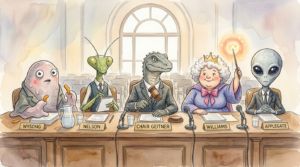
Brannon Meskahashish looked at the list. It had been on the legal pad since Tuesday. Since the hearing. Since Commissioner Nelson wrote something down and Commissioner Wysong ate the fifth Cheeto and the room moved on to the next item the way rooms do.
There was the email to engineering. And the CORA request. And the prototype still needing that filter. And someone should write the extension letter.
"That's a Friday night," ABB said.
Brannon looked at the laptop. At the legal pad. At the phone. USAA not calling. The hike was tomorrow. The evening was right there.
"Why not," he said.
ABB picked up the pen.
What They Had and What They Didn't
"We should say this out loud," ABB said. "What we have and what we don't."
Brannon looked at the legal pad. At everything they'd built and found and confirmed at the kitchen table over one productive afternoon. "Okay," he said.
What they had: 64,434 crashes. The pattern — dry roads, daylight, rear-end, phones, light switching too fast. The spending ratio — 5.6 times more on road expansion than on maintenance. The city's own danger ratings for each road, which corridors the plan says need attention most. The prototype showing all of it in one place. Accessible. Free. The accessibility audit — four failures, forty-five minutes to fix.
What they didn't have: the internal analysis. The consultant's working documents. The decisions about which roads got which danger rating and why. The procurement decision — why ArcGIS, what it cost, what alternatives they looked at. The layer underneath the layer they could see.
That was the floor they were standing on. That was enough to start.
The Email to Engineering
"Short," Ambrocius Bodacious Bocephus said. "One paragraph."
"It needs context," Brannon said.
"It needs to be read."
"Context helps it get read."
"Length stops it from getting read."
ABB let that sit for a moment. "Friday night. Engineering inbox. Monday morning. How long is the email you open first."
"Short," said Brannon Meskahashish.
"Short," said ABB.
They wrote it short. One paragraph. One question at the end: who is the right person to evaluate it. Sent to Traffic Engineering at 8:47 PM.
The Layer Underneath
The CORA request was ABB's idea. Specifically the second one. They had filed one already. But he had been thinking about what they didn't have — the procurement decision, why they chose ArcGIS, what it cost, what alternatives they looked at, whether something simpler was considered and rejected and if so why.
"That's the part that explains the gap between what the data says and what the response looks like," he said.
"What if it comes back after the vote," Brannon said.
"Then it's the record for whatever comes after the vote."
"Which might be nothing."
"Which might be nothing," ABB agreed. "Or might be something. We don't know. But if we don't file it we definitely don't know."
Filed at 9:14 PM. Three working days to respond. Up to ten. May or may not arrive before the adoption vote. Filed anyway. That's the floor.
Crashes Without Context Are Just Dots
The prototype wasn't done. It was close. There was one filter ABB wanted — the city's own danger rating for each road, cross-referenced with the zip code search, so a resident could look up their street and see both pieces at once. Without it the prototype showed crashes. With it the prototype showed crashes and context. Context was the whole point.
"Right now someone looks up their zip code and sees crashes," ABB said. "They need to see: this corridor is rated most dangerous by the city's own plan. Or: this one is rated least dangerous. That's the information that tells them whether the city already knows about their street."
"I know," Brannon said.
"Right now it's just crashes."
"I know."
"Crashes without context are just—"
"Dots," Brannon said. "We already established that dots aren't enough."
ABB looked at the legal pad. At the hike tomorrow. At the water bottle on the counter. "How long," he said.
"Hour."
"It's already ten."
"Hour," said Brannon Meskahashish.
"Okay," said ABB. He picked up the pen. Started drawing something in the corner of the legal pad while Brannon worked.
Brannon glanced over. "Is that a diagram."
"It's a map."
"Of what."
"Tomorrow's trail."
The filter went in at 10:52 PM. Zip code searchable. The city's danger ratings visible alongside the crash data. And a note on the page — honest, specific, theirs: This tool is built from public crash data. We have a public records request pending for the internal analysis. We'll update when we hear back. What's here now is accurate. It's not everything. It's enough to start.
He's on Payroll
"Who's it going to," Brannon said.
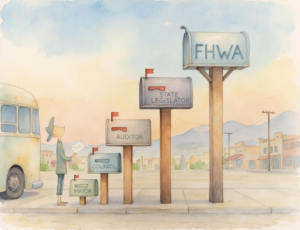
"Colleen Guillotte. City Council. City Clerk."
"Anyone else."
Ambrocius Bodacious Bocephus paused.
"The mayor," he said.
Brannon looked at him.
"He's on payroll," ABB said.
"Yeah," said Brannon.
"Why not," said ABB.
"Why not," said Brannon.
The extension letter went out at 11:23 PM. Anchored to the DOJ's Title II ADA final rule, which requires local governments the size of Colorado Springs to meet WCAG 2.1 AA web accessibility standards — a compliance framework whose original deadline of April 24, 2026 was extended to April 26, 2027 by an Interim Final Rule issued days before the May adoption vote. Specific about the ask: reopen comments for fourteen days with direct email notification, correct the accessibility failures before adoption, link the accessible data tool from the official page. The fix takes 45 minutes. We have a little time. Why not.
That was the list. Four things crossed off. The phone still face up. USAA still not calling. The hike tomorrow.
ABB looked at the trail map. Drew one more small mark. Right at the three mile point.
"What's that," Brannon said.
"A landmark," ABB said. "The view is good there."
Brannon closed the laptop. Four emails in four inboxes, waiting for Monday. A prototype honest about what it has and what it doesn't. A public records request in the system. A legal pad full of things that exist now that didn't exist this morning.
That's a Friday night in Colorado Springs. Why not.
The List on the Legal Pad
Before the first email went out, ABB said they should say it out loud — what they had and what they didn't. This is what they had.
And what they didn't have: the internal analysis behind the danger ratings, the procurement decision for ArcGIS, the methodology for how each corridor got its score. That's what the CORA request is for. It may come back before the May adoption vote. It may not. Filed anyway.
The city's crash data points to signal timing and road surface maintenance as the primary interventions. The spending ratio — 5.6 times more on expansion than maintenance — is the question Episode Eight will carry forward. A plan can correctly identify a problem and still spend the money somewhere else. The CORA request for the internal analysis is the document that would explain whether that's what happened.
What Went Out Before Midnight
The list had four items. By 11:23 PM all four were done. Not because there was urgency — the hike was tomorrow and the evening was just an evening. Because the list was there and there was a little time and why not.
None of this guarantees anything. The BOCC can hear public comment and move to the next item. The email might sit in the wrong inbox until after the vote. The public records request might come back incomplete with a fee attached. Or someone opens the right email on the right Monday. You don't know. You never know. You just send the emails.
You Have a Friday Night Too
Brannon and ABB sent four things before midnight. They're not experts. They had a laptop, a legal pad, and a USAA hold queue that started this whole chain of events. The tools they used are public. The prototype is live. The window before the May adoption vote is still open.
You don't have to do all four. One is enough. One email that didn't exist before is still one email that didn't exist before.
Search your zip code. See crash patterns in your area alongside the city's own danger ratings for each corridor. Built from public CDOT data. No login. No cost. Honest about what's pending.
The comment period closed April 2nd while the PDF was inaccessible. The DOJ's Title II ADA final rule requires local governments the size of Colorado Springs to meet WCAG 2.1 AA web accessibility standards on a federal compliance timeline that overlaps with the May adoption vote. The extension request Brannon and ABB sent is anchored to that rule. You can send your own. Every name on record asking for more time before the May vote adds weight to a request that is already reasonable and specific.
City Council votes on the adoption. They receive written comment before every meeting. This email is not about opposing the plan — it's about asking them to give residents a genuine chance to engage with it before it becomes final. A short delay, a reopened comment period with direct email notification, and the internal analysis published openly. That's a reasonable ask for a plan funded by federal public safety dollars.
The crash data comes from CDOT — publicly downloadable. The danger ratings come from the city's own published plan. No CORA request needed for either. Two residents built a free accessible tool showing both, and offered it to the city. A federally funded public safety plan should not require a public records request for residents to evaluate its priorities. You can say that in writing.
Questions You Can Ask Tonight
These put specific, documented events on the public record. You don't need to know the answer. You need the answer — or the absence of one — on tape. Pick one.
Tap any question to copy it to your clipboard.
The Room That Matters Now
The Friday night list put things into four inboxes. The rooms below are where those things either get answered or don't, and where the May adoption vote happens. All of them have public comment. All of them are recorded. Most of the time, they are nearly empty.
Traffic Engineering: Traffic-Engineering.SMB@coloradosprings.gov
City Council and City Clerk: citycouncil@coloradosprings.gov · cityclerk@coloradosprings.gov
City Council meeting schedule: coloradosprings.gov/city-council
DOJ ADA Complaint (digital accessibility): ada.gov/file-a-complaint
WAVE Accessibility Tool (free): wave.webaim.org
CDOT Crash Data (public, free): codot.gov/safety/crash-data
All templates, CORA language, and full contact list: coming to The Map series page — check back as this series continues.
Send Us What You Find
If the city responds to the extension request, send us the response. If the CORA documents arrive, send us what's in them. If you use the prototype and find something the city should see, send us that too. If you show up to the City Council vote — tell us what happened.
A screenshot. A timestamp. A response letter. A note from the parking lot. Send it.
Episode Eight is called No Applause. It's about what happens after the Friday night. After the hike. After the emails sit in four inboxes over a weekend. We'll see you there.
"You don't know. You never know. You just send the emails on a Friday night because the list needed doing and there was a little time and the hike is tomorrow. Why not."
The Map · Episode Seven · Colorado Springs · April 2026
The Dais · The Map · Three Minutes or More · Series Two · Episode Seven · Colorado Springs, Colorado · April 2026