The Unsung Heroes — A CORA Starter Civics Project · The DaisSkip to main content
A Starter CORA Project · For Students, Teachers & Curious Residents
The Unsung Heroes
How are we supporting the people who answer 911?
A semester-length starter civics project — the kind where the answer might turn out to be something heartwarming, and either way it ends up in the public record. Three doors. Four ready-to-send CORA templates. One ratio that tells you whether the support being given to El Paso County’s 911 dispatchers matches the load they carry.
Step 1 of 4 · What you’re investigating & what you’ll learn
The Question
The Research Question
What does El Paso County actually invest in supporting the mental health and retention of its 911 dispatchers, and is it matched to the volume and severity of calls they handle?
That single question, broken into the data points needed to answer it, becomes a public records project a student can complete in one semester. The skills are transferable to any future research, journalism, or civic work. And the answer might turn out to be a good one — well-supported dispatchers, healthy budget lines, peer support already in place. Either way, the public record gets stronger because somebody asked.
Helping the unsung heroes starts with knowing what they actually have. The comfort room is good. Whether it’s enough is a different question.
“Researchers call it static stress. The body floods with adrenaline and has nowhere to put it. PTSD prevalence among 911 dispatchers runs roughly 18 to 29 percent.”
What you’ll learn
01
Read budget documents
How to find a line item, what the categories mean, how to compare year over year.
02
Distinguish between agencies
Who employs whom. Who funds whom. Where each piece of the puzzle is held.
03
Write formal correspondence
A CORA request is a one-page document. Clarity beats legalese. Templates included.
04
Evaluate primary sources
Reading what the agency actually said, not what someone reported they said.
05
Triangulate findings
When three records share an answer and one disagrees, the disagreement is itself a finding.
06
Present to a public audience
A short, plain finding placed where the public actually reads.
A note for everyone
This project teaches something most school assignments do not — that public records are public, that ordinary residents have the legal right to ask, and that the answers exist whether anyone bothers to request them. That muscle, once built, transfers to every future civic question a person will ever care about.
Step 2 of 4 · The agencies that hold the records
Three Doors
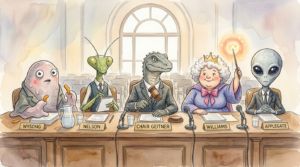
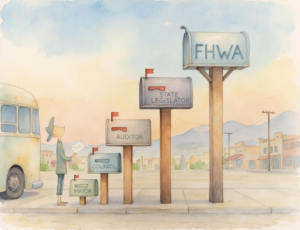
The reason the answer to one question requires three records requests is that no single agency holds the whole picture. The Sheriff’s Office runs the dispatch room and pays the salaries. The 9-1-1 Authority coordinates the wider system across two counties and tracks call volume. The Board of County Commissioners approves the Sheriff’s budget. Each holds a piece. Knock on three doors.
Door One
El Paso County Sheriff’s Office
Direct employer of most local dispatchers. Sets the conditions of the work. Pays the salaries. Maintains the policies and the comfort room itself.
Holds: budget line items for mental health programs, contracts with clinicians, internal post-incident protocols, peer-support team structure, aggregate turnover & retention data.
Door Two
El Paso–Teller County 9-1-1 Authority
Coordinates the broader 911 system across two counties. Sees the load itself — the call volume, the call types, the patterns. Their governance Board is the place where wellness is named at the system level, or isn’t.
Approves the Sheriff’s annual budget. If wellness programs were ever requested and denied — that conversation lives here. If they were requested and approved — that’s also here. Public hearings are after the substance is settled; the substance is in the budget work sessions.
Holds: Sheriff’s Office annual budget submissions, BoCC budget work session minutes & transcripts, Sheriff’s Office budget hearing records.
Why three doors, not one
Each agency’s answer alone is incomplete. Together, they triangulate. If the Sheriff’s budget shows funding for a peer-support program, the Authority’s Board minutes should reflect coordination with that program. If the BoCC approved a wellness line item, the Sheriff’s Office should be spending it. When the three records agree, you have a clean finding. When they disagree, the disagreement is the finding.
Step 3 of 4 · How to file & what to do with the answers
The Four Templates
CORA requests do not need legal language. They need clarity. State exactly what records you want and what date range. The four templates below can be sent as written, with your name and contact information added at the bottom. Three of the four target current operations and budget data. The fourth requests historical meeting records, which provide the longer arc of how — or whether — dispatcher wellness has been discussed at the Authority over time.
Send To
El Paso County Sheriff’s Office
Why this request
The Sheriff is the actual employer of most local dispatchers. The budget line items reveal what the county invests in support. Contracts reveal whether providers are trauma-trained for this specific work, or whether dispatchers get the same employee assistance any office worker would. Turnover and retention numbers tell you whether the support is working — high turnover usually means the load is outpacing the help.
What to send
Under the Colorado Open Records Act, I am requesting the following records for fiscal years 2022 through 2025:
1. Annual budget line items for any program providing mental health support, peer support, employee assistance, or wellness services to El Paso County Sheriff’s Office dispatch personnel.
2. Contracts or agreements with any clinical mental health providers who serve dispatch personnel, including the credentials and trauma specialization of those providers if reflected in the contract.
3. Any internal policy documents describing post-critical-incident protocols for dispatchers, peer support team structure, or use of wellness or comfort rooms.
4. Aggregate annual turnover and retention data for dispatch positions, including average length of service and number of departures per year.
If any portion of this request is denied, please cite the specific statutory exemption.
[Your name]
[Your contact information]
[Date]
How to file
Through the records request portal at epcsheriffsoffice.com, or by mailing the request to the Records Division. The Sheriff’s Office must respond within three business days under CORA, with possible extensions if the records require gathering.
Send To
El Paso–Teller County 9-1-1 Authority
Why this request
The Authority sees call volume and severity at the system level — the load itself, in numbers. Putting their figures next to the Sheriff’s budget tells you whether the support is matched to the work. The board discussion piece is the quiet tell: whether dispatcher wellness has been raised at the governance level, or whether it sits outside the agenda.
What to send
Under the Colorado Open Records Act, I am requesting the following records for calendar years 2022 through 2025:
1. Aggregate annual call volume data, including total calls received, average daily call volume, and peak hourly volumes.
2. Aggregate call type data showing the distribution of call categories (medical emergency, suicide and mental health crisis, violent crime in progress, traffic accident, etc.) without any personally identifying information.
3. Any internal reports, studies, or quality assurance reviews discussing dispatcher workload, stress exposure, or mental health.
4. The Authority’s adopted budget documents and any board discussion of dispatcher wellness programs reflected in agendas or minutes.
If any portion of this request is denied, please cite the specific statutory exemption.
[Your name]
[Your contact information]
[Date]
The Board approves the Sheriff’s annual budget. If wellness programs were ever requested and denied, that conversation lives in the budget submissions. If they were approved, that’s in the same place. Budget work session minutes are where these discussions actually happen — the public hearings most residents attend are usually after the substance is already settled.
What to send
Under the Colorado Open Records Act, I am requesting the following:
1. The Sheriff’s Office annual budget submissions for fiscal years 2022 through 2025, with particular attention to any line items related to dispatch personnel support, employee assistance, mental health, or wellness programming.
2. Minutes or transcripts of any BoCC budget work sessions or hearings where dispatch wellness or mental health was discussed.
If any portion of this request is denied, please cite the specific statutory exemption.
[Your name]
[Your contact information]
[Date]
How to file
Through the El Paso County Clerk’s office records portal at clerkandrecorder.elpasoco.com, or by mail. Budget documents are sometimes already public on the county finance pages — check before filing.
Send To
El Paso–Teller County 9-1-1 Authority · Historical Archive
Why this request
This is the long-arc question. If wellness has been on the Authority’s agenda repeatedly over five years, that’s one finding. If it never came up, that’s a different finding. And if minutes do not exist for years they should — that’s the most important finding of all, because Colorado’s Open Meetings Law requires retention. The absence is its own answer.
What to send
Under the Colorado Open Records Act, I am requesting the following records for calendar years 2020 through 2025:
1. Minutes of all regular and special meetings of the El Paso–Teller County 9-1-1 Authority Board.
2. Any meeting recordings retained by the Authority, in whatever format currently stored (Zoom recordings, audio files, video files, or other).
3. Agendas associated with each of those meetings.
4. Any written reports or correspondence presented to the Authority Board during those meetings concerning dispatcher workload, mental health, wellness programming, or staff retention.
If meeting minutes or recordings for any portion of this period do not exist or have not been retained, please state so explicitly and cite the relevant retention policy.
If any portion of this request is denied, please cite the specific statutory exemption.
[Your name]
[Your contact information]
[Date]
How to file
Email info@elpasoteller911.org or use the contact form at elpasoteller911.org. Note: this request asks for what should already exist under Colorado’s Open Meetings Law. If the Authority cannot produce a complete archive, that absence is itself a meaningful finding.
A note on fees. Under Colorado law, agencies can charge a research and retrieval fee for CORA requests, currently capped at around $33 per hour after the first hour. For focused requests like the four above, the cost is usually small or waived. Most agencies waive small requests. If a fee notice arrives, you can request a written explanation, narrow the request, or ask for a fee waiver based on public interest. None of the templates above should generate a large bill if filed as written.
When the answers come back
The triangulation
Put the answers next to each other on a single page. The first three requests give the current snapshot. The fourth gives the historical arc — what was discussed, when, and what was not. Together they answer the question more completely than any single request could.
What to compare. Sheriff budget for wellness vs. 911 Authority call volume = a ratio of support to load. Authority Board minutes vs. BoCC budget submissions = whether wellness conversations stayed at the agency level or made it into county budgeting. Historical archive completeness vs. Open Meetings Law = a compliance check.
What to publish. Short. Plain. Cite the records by their CORA request numbers. The point is not to produce a damning exposé. The point is to produce a finding — whatever the finding turns out to be.
Where the finding goes
A binder helps no one. Once the comparison page is done, send it — in the same week — to three places at once. (1) The local newspaper or TV outlet that covers county government. (2) The 911 Authority Board, with a brief cover note thanking them for the records and asking that the finding be entered into the record at the next regular meeting. (3) Your county commissioner, with the same cover note, asking that it be considered during the next Sheriff’s budget work session.
If something is wrong, three eyes catch it faster than one. If the finding is heartwarming, three audiences celebrate it. Either way, the public record gets stronger because somebody asked.
Step 4 of 4 · The pacing & the long view
Suggested timeline · one semester, manageable pacing
This is the rhythm we’d suggest for a class running this as a semester project. Nothing here is rigid. The fastest version is about six weeks if a student is determined and the agencies are responsive. The fullest version, with reflection and follow-up, fills a semester comfortably.
Week 1–2
Read this guide. Watch a 9-1-1 Authority Board meeting live (or attempt to find a past recording — note what you find or do not find). Watch a recent BoCC meeting on the county YouTube channel for comparison. Get familiar with the language and the players. Write down questions you do not yet understand.
Week 3
File all four CORA requests on the same day. Save copies. Note the date and the assigned request number for each one.
Week 4–6
Wait for responses. Three business days is the statutory minimum, but extensions are common for documents that need gathering. Use this time to research comparable counties. Larimer County, Boulder County, and Denver all have public dispatch budgets you can use as benchmarks.
Week 7–9
Process the responses. Build a single comparison page. Identify the ratio. Identify what is missing or what was redacted. If anything was denied, note the exemption cited. Note especially whether the historical archive request (Request Four) produced a complete record or revealed gaps.
Week 10–12
Write the finding. Short. Plain. Cite the records by their CORA request numbers. Submit to all three public channels in the same week. Send the advocacy letter to the 911 Authority Board in parallel.
Week 13–14
Track the response. Did anyone reach out? Did any commissioner reference it? Did any policy change get proposed? The follow-up is part of the project, not optional.
For teachers · why this works as a class project
A note for the educator
This project meets standards for civics, government, journalism, research methods, and statistics simultaneously. Students learn to read budget documents, distinguish between agencies, write formal correspondence, evaluate primary source data, and present findings to a non-academic audience.
It also teaches something most school projects do not — that public records are public, that ordinary citizens have the legal right to ask, and that the answers exist whether anyone bothers to request them. That muscle, once built, transfers to every future civic question a student will ever care about.
The project can be done individually or in teams of three, with each student owning one of the three doors. A team version produces a stronger comparison page and gives students experience coordinating across roles, which mirrors how actual public-interest research works.
The bigger ask · transparency going forward
Records requests look backward. An advocacy letter looks forward. After the finding is published, send a parallel letter to the 9-1-1 Authority Board asking that future agendas include a recurring “Dispatcher Wellness” standing item, or that aggregate call-load and turnover data be published quarterly without a records request. The goal is to make this kind of project unnecessary in the future — not because nobody asks, but because nobody has to.
Resources · where to learn more
Colorado Freedom of Information Coalition
Plain-language CORA guidance, sample request templates, fee-waiver language, and a public-records hotline. Run by working journalists and attorneys.
Where this guide first showed up — in the comfort-room segment of the April 21, 2026 BoCC recap. Full audio, show notes, and the broader context that prompted the question.
“Whatever the answer turns out to be — well-supported or under-supported — the finding belongs in the public record. Helping the unsung heroes starts with knowing what they actually have.”