
































A year following a number that didn't add up
The Import Economy began as a single agenda item at an El Paso County Board of County Commissioners meeting — a funding request from an anti-trafficking organization that received less than half of what it asked for. That gap, between what was requested and what was approved, is not unusual. What was unusual was that nobody in the room explained why, and almost no one in the county knew the meeting had happened.
Over the following year, that one line item became four long-form essays covering how human trafficking operates along Colorado's I-25 corridor between Denver and Pueblo, how the local government funding structure that responds to it actually works, what the research says about which interventions produce documented outcomes, and what it practically looks like when someone leaves. The series is complete. The funding gap is not.
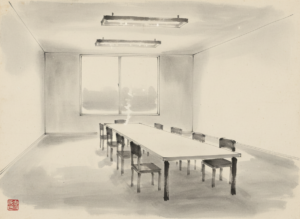
Colorado Springs sits at the intersection of several conditions that make it a specific kind of target: a large transient military population cycling through on two- to four-year rotations, a major interstate corridor, a significant gap between military-adjacent housing costs and civilian wages, and a civic engagement rate low enough that most county funding decisions are made in rooms with more empty chairs than full ones.
Each part of the series can stand alone. Together they trace the full arc — from how trafficking enters a community, to how local government responds, to what actually works, to how someone leaves.
How trafficking is marketed, how it enters a community, and why Colorado Springs is a specific kind of target — not despite the military presence, but partly because of it.
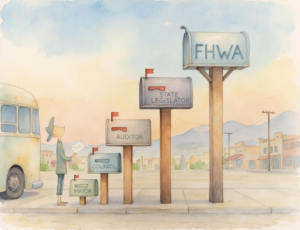
Read Part I →The El Paso County funding structure for anti-trafficking services — who decides, how they decide, and what happens in the rooms where most of the chairs are empty.
Read Part II →What the research actually shows — interventions with documented outcomes, and the organizations in Colorado Springs doing the work that holds up under scrutiny.
Read Part III →What leaving actually looks like — financially, practically, socially — and why the services that make exit possible are consistently the ones with the biggest funding gaps.
Read Part IV →The people most affected had no reason to care about a meeting they'd never heard of.
While writing Part II, the same problem kept surfacing: teenagers, young adults, people without the financial context to recognize what was happening to them — the very people most likely to be affected by the decisions in that county committee room — had no reason to engage with a government process that was invisible to them.
So a different question emerged: what if financial literacy were the entry point? Not because money is more important than safety, but because the math of personal spending and the math of a city budget are structurally identical. Money in. Money out. The gap. Once you can read one, you can read the other. A teenager who has added up what their phone, clothes, food, and transportation actually cost per month has already done the conceptual work required to read a county funding agenda. They just don't know it yet.
That question became Lesson Zero — a four-part financial literacy curriculum that starts with a teenager's own monthly spending and ends with a letter to city council. It does not assume civic interest. It starts where everyone already is and builds outward from there. All four workbooks are free, interactive, and printable.
Four interactive workbooks, print-ready PDFs, sample documents including a filled-in budget for a realistic 16-year-old in Colorado Springs, and three versions of a letter to city council. All free. No account required.
Three entry points. All of them lead to the same room.
The series, the curriculum, and the meeting are three different on-ramps to the same destination — a county funding committee that meets the third Wednesday of every month at 12:30 PM, 9 E. Vermijo Ave, Colorado Springs. No application required. The chairs are almost always empty.
The Brochure — how trafficking enters a community, why Colorado Springs is a specific kind of target, and what the I-25 corridor looks like from the outside.
Start with Part I →Add up what you cost per month. It will almost certainly surprise you. No civic interest required — just a phone and five minutes.
Start with Part A →Third Wednesday, 12:30 PM, 9 E. Vermijo Ave, Colorado Springs. No application required. This is where the funding gap in Part II gets set every month.
Volunteer page →Independent. Free. Exactly what it appears to be.
The Import Economy tallies to four long-form essays, four interactive workbooks, four print-ready PDFs, sample documents including Jordan's Worksheets, and a curriculum that connects personal budget math to a real county funding gap. All of it is free. None of it is behind a form. The series is complete. The curriculum is live. The room is open every third Wednesday at 12:30 PM.
StorySeed is not journalism. There is no editor, no newsroom, no institutional backing. There is one person with a communications degree that took seven years and a D in Government the second time. Take everything here as a starting point, not a verdict — and if you find an error, the email is on the About page and yes, we read it. The work is independent. The access is free. The agenda is exactly what it appears to be.